
Views: 0 Author: Site Editor Publish Time: 2026-10-14 Origin: Site


Ever unboxed a fresh pallet of acrylic only to discover the texture feels slightly shallower than your previous order? For fabricators, architects, and industrial designers, this microscopic discrepancy can instantly disrupt a carefully planned assembly line. Imagine routing a custom cabinet door and finding the textured panel rattles loosely inside its aluminum extrusion channel. Or worse, powering up a massive backlit display only to spot uneven light diffusion and glaring LED hot spots across the surface.
While incredibly frustrating on the shop floor, these pattern depth shifts are a standard manufacturing reality rather than a material defect. They stem from acceptable industry thickness tolerances and the unyielding physics of polymer production. In this technical guide, we will break down exactly why these variations occur from an engineering perspective. By understanding the underlying science of plastic manufacturing, you can implement actionable procurement strategies to eliminate inconsistencies in your ongoing architectural and design builds.
Tolerances Dictate Perception: Every acrylic sheet has an inherent thickness tolerance. This base variation directly influences how deep or shallow a surface pattern appears and feels.
Production Methods Matter: The specific manufacturing route, whether cell cast or extruded, fundamentally determines the baseline consistency of the texture across multiple batches.
Physics and Environment: Factory humidity, exothermic curing temperatures, and microscopic wear on metal rollers all contribute to dimensional micro-shifts.
Smart Procurement is Crucial: Specifying exact lot numbers and aligning your dimensional requirements with a technically advanced supplier will drastically reduce visible mismatches.
To truly grasp why texture depth fluctuates, we must first step onto the factory floor. Applying a pattern to a polymer is not as simple as stamping a design into cold, rigid plastic. It requires complex thermal and chemical procedures that dictate the final structural integrity of the sheet.
The industry relies heavily on two distinct techniques: cell casting and extrusion. Each process manipulates the raw polymer in a fundamentally different way.
In the cell cast method, liquid methyl methacrylate monomer is combined with specific catalysts. This volatile mixture is poured directly into a mold formed by two parallel panels. The liquid resin undergoes a controlled heating cycle inside a water bath or autoclave, causing it to polymerize and harden. Because this relies on fluid curing within a static cavity, the resulting sheet achieves an exceptionally high molecular weight. This yields superior optical clarity and excellent resistance to chemical crazing.
In contrast, the extrusion process starts with solid polymethyl methacrylate pellets. These pellets feed into a massive industrial extruder, melting down into a highly viscous, molten state. This hot polymer is continuously forced through a precision die and squeezed between a series of heavy metal calendering rollers. These rollers instantly cool and flatten the plastic into a continuous sheet.
Specifically, the method of imprinting a texture is entirely dependent on this primary production choice. In cell casting, the pattern lives inside the mold itself. The interior glass or metal surface is etched or sandblasted. As the liquid resin heats and cures, it flows into every microscopic crevice, perfectly adopting the mold's topography.
Shifting to extrusion, the pattern is applied through brute mechanical force. As the molten plastic exits the die, it passes through calendering rollers. One of these steel rollers is deeply embossed with the desired design. The immense hydraulic pressure transfers the texture, creating a highly uniform Pattern Acrylic Sheet mere seconds before the material solidifies.
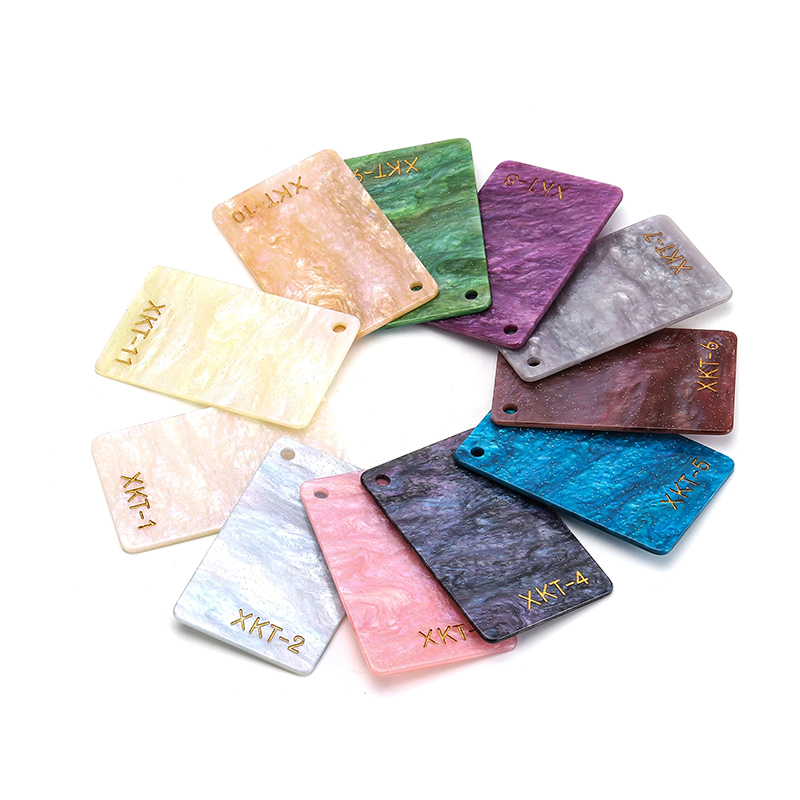
When an assembly team notices a depth discrepancy, the immediate assumption is usually a flawed imprinting process. However, the most frequent technical cause is directly tied to the overall thickness tolerance of the base sheet.
No manufacturing facility can produce a plastic sheet with absolute mathematical perfection across every square millimeter. The industry establishes acceptable tolerance ranges to account for thermal dynamics. Because cell casting involves liquid shrinkage and potential mold deflection under extreme heat, its tolerances are naturally wider. Extrusion, governed by digitally calibrated mechanical rollers, maintains a much tighter profile.
Manufacturing Method | Typical Thickness Tolerance | Primary Engineering Cause |
|---|---|---|
Cell Cast Acrylic | +/- 10% to 15% | Volumetric shrinkage and glass mold deflection during exothermic curing. |
Extruded Acrylic | +/- 5% | Micro-fluctuations in hydraulic roller pressure or molten die flow. |
Furthermore, the perceived depth of a pattern is always relative to the total volume of the sheet. Consider a mold designed to press a 1mm deep texture into a 5mm thick panel. If the base thickness fluctuates down to 4.5mm due to standard casting tolerances, that 1mm pattern suddenly occupies a significantly larger percentage of the material's total cross-section.
This fractional shift fundamentally alters the refraction angle of light passing through the panel. A thinner underlying base makes the texture feel shallower beneath a fingertip and look less pronounced to the eye, even though the physical steel roller or etched glass mold remained completely unchanged.
Over the past few years, the architectural and commercial design sectors have experienced a massive shift toward seamless, monolithic visual structures. Lighting designers are pushing for ultra-precise lumen control in large-scale illuminated facades, demanding unprecedented dimensional stability from polymer suppliers. As projects move away from segmented panels toward continuous, edge-to-edge light diffusion, the tolerance for batch-to-batch variance has practically vanished. To meet these rigorous modern specifications, top-tier manufacturers are heavily investing in automated optical inspection systems and advanced digital extrusion calibrations, ensuring that aesthetic materials perform with engineering-grade reliability.
Beyond baseline thickness tolerances, several highly specific environmental and mechanical variables shift from one production run to the next. Understanding these factors explains why achieving absolute batch-to-batch identicality is a complex engineering hurdle.
Cell cast acrylic undergoes a violent chemical transformation as individual monomers link into dense polymer chains. This exothermic reaction generates intense heat, causing the material to shrink by roughly two to four percent as it solidifies. If one batch cools slightly faster than the next due to minor factory scheduling adjustments, the volumetric shrinkage rate changes. This micro-variance impacts exactly how tightly the curing acrylic pulls away from the textured mold, subtly altering the crispness of the final impression.
Raw acrylic resin is notoriously sensitive to ambient conditions prior to polymerization. The relative humidity and ambient air temperature on the factory floor directly affect the initial viscosity of the liquid monomer. Pouring a batch of Decorative Pattern Acrylic Sheet on a cold, dry morning results in different fluid dynamics compared to pouring on a humid afternoon. These subtle shifts change how deeply the resin penetrates the microscopic valleys of a textured mold.
The physical tooling used to stamp patterns degrades over time. In high-volume extrusion, heavy steel rollers crush against hot plastic thousands of times a shift. Over months of continuous friction, the sharpest edges of the embossed roller wear down at a microscopic level. A batch run on a brand-new roller will inherently feature a deeper, more aggressive texture than a batch run six months later just before tooling recalibration.
Architectural panels are rarely just clear plastic. Projects often demand frosted finishes, specific tints, or light-diffusing particles. Introducing UV stabilizers or color pigments fundamentally alters the chemical behavior of the polymer mix. Certain additives increase the stiffness of the molten plastic or accelerate curing times. Even a fraction of a percent difference in these formulations between batches will change how the material receives and retains a textured impression.
Industrial equipment requires constant resetting. Switching a production line from a smooth clear sheet to a textured profile means operators must recalibrate hydraulic pressures, adjust water bath temperatures, and reset die lips. Mechanical baseline shifts mean a machine might apply slightly different pressure on a Tuesday compared to the previous Friday. These calibration micro-inconsistencies translate directly into physical texture variance.
For procurement managers and structural designers, the critical issue is how these microscopic variations cause cascading failures on the assembly floor. A fraction of a millimeter might look acceptable on a technical data sheet, but it can ruin the aesthetic and structural integrity of a finished build.
When utilizing edge-lit LED configurations, consistency in light transmission is non-negotiable. The depth of a surface pattern dictates exactly how light waves scatter. If a new batch features a marginally shallower texture, the diffusion drops. This creates glaring hot spots where individual LED diodes become visible through the panel. Conversely, a deeper pattern scatters light too aggressively, dropping the overall lumen output and creating uneven illumination across a multi-panel installation.
Large retail partitions and extensive wall cladding require joining multiple sheets side-by-side. If a fabricator attempts to butt-join a panel with a positive four percent thickness tolerance against a panel with a negative four percent tolerance, the resulting physical lip is highly visible. Furthermore, if the geometric pattern depth does not align perfectly across the seam, the continuous visual flow is broken, resulting in an unprofessional, sloppy finish.
In custom furniture and architectural framing, textured plastics must integrate seamlessly with aluminum extrusions and wood channels. If a patterned sheet runs thick, it will not slide into pre-machined metal channels, forcing laborers to waste hours routing or sanding down edges. If it runs thin, the panel rattles, requiring messy silicone gaskets to secure it. Additionally, automated CNC routers rely on exact focal lengths. Unaccounted surface depth variance leads to incomplete cuts, ruined engraving bits, and scrapped materials.
Selecting the correct manufacturing process is the single most important decision a buyer can make to mitigate variance. You must weigh the aesthetic complexity of your design against your engineering tolerance requirements.
Cast acrylic is the premium choice for high-end aesthetic applications. Because the liquid resin perfectly conforms to glass molds, it achieves incredibly complex, deep, and organic textures that metal rollers simply cannot replicate. It offers superior optical clarity and higher thermal resistance, preventing crazing during aggressive CNC machining.
However, due to the natural physics of liquid shrinkage and manual mold assembly, cast sheets suffer from wider batch-to-batch variance. If your project demands strict dimensional uniformity across hundreds of panels, the perceived depth fluctuations in cast material may pose a challenge.
Extruded acrylic is the backbone of high-volume, cost-effective fabrication. The digital precision of the mechanical roller system ensures a highly uniform thickness. Because hydraulic pressure is constantly monitored, extruded sheets maintain exceptionally tight tolerances. This mathematically minimizes batch-to-batch variance, making it the superior engineering choice for structural frames and precise lighting enclosures.
The trade-off is that mechanical rolling limits the depth and complexity of the texture. Furthermore, extruded sheets have a slightly lower molecular weight, requiring slower feed rates during CNC routing to prevent the plastic from melting and gumming up the cutting bit.
Mitigating the risks of batch variance requires proactive supply chain management. A textured polymer is not a generic commodity you can reorder blindly six months later and expect microscopic perfection. Implement these empirical strategies to protect your production line.
The most foolproof method to eliminate variance is to bypass multiple batches entirely. A lot number guarantees the material was produced using the exact same raw resin batch, identical environmental conditions, and the same machine calibration. Calculate your total project volume upfront, add a standard ten percent overage for fabrication errors, and issue a single purchase order. This ensures curing shrinkage and roller wear remain identical across your entire inventory.
Relying on a material sample that has been sitting in your design library for two years is a massive procurement error. Molds degrade and resin formulations update. Always mandate a First Article Inspection sample cut straight from the current production run allocated to your order. This allows your engineering team to verify exact thicknesses with digital calipers before authorizing a massive freight shipment.
Never assume standard dimensions. If your design requires fitting a standard 1220x2440mm sheet into a tight aluminum channel, communicate this clearly. Request the official technical data sheets and confirm if their standard tolerance aligns with your machining requirements, or if they need to sort and select the most uniform sheets from a specific run for your project.
Navigating polymer tolerances requires a supply partner who prioritizes technical precision and rigorous quality assurance. Facilities equipped with modern infrastructure inherently produce more stable materials. By utilizing advanced digital calibration and automated thickness monitoring across both casting and extrusion lines, manufacturers can combat the natural variables of plastic production.
For commercial builds requiring specific dimensions, sourcing an Allsign pattern acrylic sheet ensures access to standard architectural sizes like 1220x2440mm and 1220x1830mm, with precision thickness capabilities ranging from a delicate 1.8mm up to a robust 30mm. Whether you need high transmittance panels for lighting or deep 3D textures for custom furniture, partnering with a dedicated B2B supplier guarantees transparent communication regarding lot numbers, tolerances, and structural capabilities.
Pattern depth variations are an unavoidable reality of plastic manufacturing, driven by thermal dynamics, curing shrinkage, and mechanical tooling wear. While a fraction of a millimeter shift can cause headaches in seamless joining or precise LED diffusion, it does not have to ruin your final build.
By understanding the fundamental engineering differences between cast and extruded processes, you can specify the right material for your structural needs. Combine this knowledge with strategic procurement practices like ordering single batch lots and verifying current-run samples. If you are ready to secure dimensionally stable, high-transmittance materials for your next architectural project, consult with your supplier to lock in the exact specifications your design demands.
No. Slight variations are an expected result of industry-standard thickness tolerances and the physical limitations of imprinting tools over time. A variation is only classified as a true defect if it explicitly exceeds the manufacturer's stated tolerance percentage for that specific production line.
Extruded materials typically maintain a tighter tolerance of approximately +/- 5% due to digital roller calibration. Cast materials, which rely on liquid resin curing inside static molds, generally exhibit a wider tolerance ranging from +/- 10% to 15%, depending on the overall volume of the sheet.
Standard digital calipers often fail to capture the true depth of a textured surface due to the uneven peaks and valleys. Quality control engineers use specialized depth micrometers with needle-point anvils or automated optical inspection lasers to map the exact topographical variance across the sheet.
Yes, it can. A deeply embossed pattern creates variations in the cross-sectional thickness of the sheet. The deepest valleys of the texture act as stress concentrators. If the panel is subjected to heavy blunt force or extreme thermal expansion, micro-fractures are more likely to propagate from these thinner, weaker points.
The most effective method is to provide your supplier with the original lot number from your previous purchase order. If that is unavailable, send them a physical offcut of your existing material so their engineering team can analyze the thickness and match the texture depth as closely as current tooling allows.


