
Views: 0 Author: Site Editor Publish Time: 2026-10-05 Origin: Site


Picture this. You just spent four hours running a complex, multi-depth toolpath on a flawless, large plastic panel. The surface finish is glassy. The dimensions are dead-on. But the exact moment you kill the vacuum table pressure, the edges of the board curl upward like a potato chip. Your perfectly flat project is now severely warped.
This frustrating scenario is rarely a machine error. Instead, it is a predictable physical reaction rooted in material science. Machining does not just remove stock. It unleashes hidden internal stress locked inside the plastic since its manufacturing day. This sudden release of tension, combined with the intense heat of the cutting tool, forces large panels to warp entirely out of equilibrium.
In this comprehensive guide, we will break down the exact mechanical reasons behind this deformation. More importantly, we will share proven, shop-tested methods to keep your large-format panels perfectly flat from the storage rack to the final installation.
Internal Stress Release: Carving material from one side of a panel disrupts its physical balance. This releases built-up manufacturing tension, causing the material to bow toward or away from the machined face.
Heat and Friction: High-speed CNC routing generates intense localized thermal energy. This trapped heat causes uneven expansion and contraction within the polymer structure.
Material Matters: Cell-cast plastics possess a multidirectional, uniform molecular structure. This makes them significantly less prone to bowing during heavy machining compared to their extruded counterparts.
The Annealing Solution: Slowly heating the material in an industrial oven and allowing it to cool gradually eliminates internal stresses entirely, ensuring dimensional stability.
Proper Storage: Storing materials at an angle introduces a permanent pre-machining warp known as creep. Sheets must be stored completely flat in climate-controlled environments.
When fabricating oversized plastic panels, dimensional stability is the primary concern for engineers and operators alike. Understanding the mechanics of why polymers move is the foundational step toward preventing costly dimensional failures.
Every manufactured polymer panel contains an inherent level of surface tension. During the factory production process, the outer layers—often referred to as the skins—of the material cool at a slightly different rate than the inner core. This creates a tightly bound, balanced state of tension across the entire board.
When you use a router to pocket, engrave, or face one side of a large panel, you are physically stripping away that tension-holding skin. The uncut side of the panel retains its original surface tension and suddenly begins to pull harder than the newly machined side. This asymmetrical tension forces the panel out of equilibrium. The larger the surface area and the deeper the cut, the more pronounced this mechanical bowing becomes.
While plastic is widely viewed as completely waterproof, it is actually mildly hygroscopic. Over time, it absorbs minute amounts of moisture from the ambient shop air. When both sides of a raw panel are exposed equally, this absorption rate remains uniform.
Machining alters this delicate dynamic. Carving away the dense surface layer exposes the slightly more porous inner core to the humidity of the room. If one side absorbs moisture at a different rate than the untouched side, the material experiences uneven volumetric expansion. This is particularly noticeable when using a Clear Acrylic Sheet for transparent architectural applications, where even subtle surface cupping can cause severe optical distortion. Maintaining a controlled relative humidity in your workspace is a simple, highly effective way to mitigate this hidden variable.
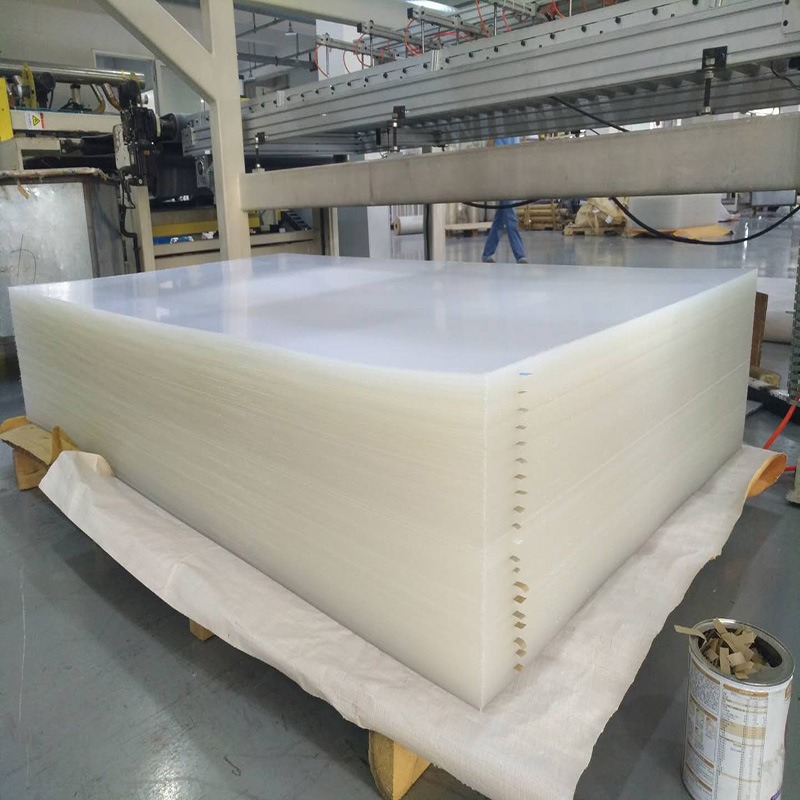
Beyond the sudden release of inherent tension, the machining process itself introduces violent external forces that destabilize plastics. The primary disruptor on the router bed is thermal energy. Polymers have a relatively low melting point coupled with a high coefficient of thermal expansion, making them incredibly sensitive to heat.
Looking at recent industry trends across architectural fabrication and sign-making, there is a massive push toward high-speed CNC automation. Shops are running spindles at blistering feed rates to maximize daily throughput. While gantry speeds have evolved, polymer physics remains exactly the same. This relentless pursuit of speed often ignores the thermal thresholds of thermoplastics. Consequently, we are seeing a noticeable industry-wide spike in dimensional rejection rates. Balancing modern production demands with mindful heat management is now the defining factor between a profitable shop and one drowning in scrap.
Friction is the unavoidable byproduct of a carbide tool engaging with solid material. When routing large panels, utilizing dull bits, incorrect spindle speeds, or sluggish feed rates generates massive amounts of localized friction strictly on the machined side of the panel.
As the temperature spikes inside the cut channel, the heated side of the plastic expands. Once the toolpath is complete and the panel begins to cool down to room temperature, that machined side contracts. Because this drastic thermal cycling only occurred on one face of the material, the uneven contraction literally pulls the panel into a bowed shape.
Efficiency in manufacturing often pushes operators to remove as much material as possible in a single, heavy pass. Unfortunately, plunging a tool too deep increases its physical engagement with the material. This traps heat inside the groove and maximizes the violent release of surface tension.
Experienced fabricators rely on multiple shallow passes—known in the trade as step-downs—rather than single deep cuts. By shaving the material away gradually, the tool generates significantly less heat per pass. Furthermore, the internal stresses of the plastic are released in smaller, manageable increments. This methodical approach preserves the structural integrity of the remaining base layer.
Not all plastics are created equal. The specific manufacturing method of the raw material plays a definitive role in how it behaves under a spinning router bit. Specifying the wrong type of material for a large-scale machining project almost guarantees a warped outcome.
Feature | Extruded Processing | Cell-Cast Processing |
|---|---|---|
Manufacturing Method | Forced through heavy mechanical rollers | Cured naturally inside glass molds |
Molecular Structure | Directional, aligned polymer chains | Multidirectional, cross-linked chains |
Internal Stress Level | Very High | Extremely Low |
Machinability | Prone to melting and gumming on bits | Chips cleanly, excellent thermal resistance |
Best Application | Simple cuts, thermoforming, budget projects | Deep pocketing, precision CNC routing |
For precision routing, industry professionals almost exclusively specify a Cast Acrylic Sheet. Because it cures slowly, cast material contains minimal internal stress. Premium cast variants boast a remarkable 93 percent light transmittance and are available in robust thicknesses ranging from 1.8mm all the way up to 50mm. When you carve into a cast panel, the multidirectional polymer chains maintain their structural rigidity far better than extruded types. While it is not entirely immune to bowing if machined poorly, it provides the most stable foundation available for large-panel fabrication.
Architectural displays and high-end signage frequently require specialized finishes. This introduces an entirely new set of variables to the machining process. Reflective plastics demand distinct parameters compared to standard transparent or opaque panels.
Fabricating a Mirror Acrylic Sheet involves dealing with a bimetallic strip effect. These panels consist of a standard substrate that has been vacuum-metallized on one side and sealed with a rigid, protective back-coating. The core plastic and the rigid backing react completely differently to thermal expansion and mechanical tension.
When you machine through the reflective backing, the protective tension is unevenly distributed. If the tool generates too much heat, the backing can shrink or expand at a different rate than the core plastic, causing the entire panel to curl aggressively. Machining mirrored materials requires highly optimized, low-heat cutting parameters to ensure the bond between the substrate and the reflective coating remains perfectly stable.
Proper material selection and careful toolpaths reduce the risk of warping. However, the most scientifically sound method to guarantee a dead-flat panel is thermal conditioning. In industrial plastics fabrication, this critical process is known as annealing.
Annealing is a controlled thermal process designed specifically to relieve internal stresses within a polymer. It involves placing the plastic in an industrial, air-circulating oven and slowly raising the temperature to just below the material's glass transition temperature. The material is held at this temperature for a specific duration, followed by an extremely slow, controlled cooling phase back to room temperature.
From a molecular standpoint, heating the plastic increases the mobility of the polymer chains. This influx of thermal energy allows the tightly wound, stressed chains to relax and realign into a natural, stress-free resting state. By eliminating the internal stresses before you ever turn on the CNC machine, the material will not react violently when the surface skin is removed.
Executing this process requires precise temperature control. For standard panels up to 9mm thick, the oven is typically ramped up to roughly 175 degrees Fahrenheit and held for four to six hours. The most crucial phase is the cooldown. The temperature must drop by no more than 18 degrees Fahrenheit per hour. Rushing the cooldown phase instantly ruins the annealing effort.
If annealing is not an option due to budget constraints or lack of equipment, operators must rely entirely on optimized machining practices to manage heat and tension release.
The ultimate goal of machining plastic is to remove material while transferring the generated heat into the waste chip. You absolutely cannot allow that heat to absorb into the remaining panel. This requires dialing in a precise chip load, which is the physical size of the plastic chip removed by each cutting edge during one revolution.
If your spindle speed is too high and your feed rate is too low, the tool will simply rub against the plastic. This melts the material and causes severe thermal warping. Conversely, a proper feed-to-speed ratio creates a clean, distinct chip that acts as a heat sink, carrying the thermal energy away from the cut. Maintaining a chip load between 0.010 inches and 0.020 inches generally ensures cool cutting conditions.
How a panel is secured to the router bed directly impacts its final flatness. Mechanical clamps apply concentrated, localized pressure to the edges of the material. If a large panel has a natural, subtle bow from the factory, clamping the edges will force the sheet flat against the spoilboard.
Machining the panel while it is under this forced mechanical tension is completely counterproductive. Once the clamps are released, the panel will immediately spring back to its original bowed shape. Vacuum tables are the industry standard because they distribute holding downforce evenly across the entire surface area without introducing localized mechanical stress points.
When the project design allows for it, operators can utilize balanced machining to counteract tension release. If a large, deep pocket must be routed into the face of a panel, it will likely bow toward the cut. By flipping the panel over and machining a similar volume of material from the back side, you release the surface tension on both sides equally. This balanced release equalizes the pulling forces, allowing the core material to lay flat.
Deformation is not always caused by the CNC machine. Frequently, the warp is introduced weeks before the material ever touches a router bed. Proper inventory management is a non-negotiable step for dimensional stability.
One of the most common and damaging mistakes in fabrication shops is storing large panels vertically, leaning them against a wall to save floor space. Over time, gravity exerts a constant, uneven force on the leaning panel. Because plastic is a viscoelastic material, it responds to this constant load through a process called creep or cold flow.
Creep causes permanent deformation. Storing a large Acrylic Sheet at an angle forces the unsupported center to bow under its own weight. If you place this creep-deformed sheet onto a vacuum table, the suction flattens it temporarily. But the moment the vacuum is turned off, the material's memory forces it right back into the bowed shape, ruining the machined part.
To prevent pre-machining warp, materials must be stored completely flat horizontally. Industrial standards require full-support pallets or heavy-duty racking systems that support the entire surface area of the sheet without sagging. Furthermore, maintaining a stable shop temperature and a consistent relative humidity ensures the material remains in a state of equilibrium until fabrication begins.
Despite meticulous storage and perfect CNC feed rates, fabricators may occasionally encounter a panel that exhibits a slight bow after aggressive material removal. Throwing away an expensive, large-format panel is rarely the most economical first option.
For panels that have bowed due to thermal expansion during machining, it is sometimes possible to reverse the effect using controlled heat. This involves placing the warped panel on a perfectly flat, heat-resistant surface, such as a thick machined aluminum plate. The panel is placed into an oven and heated just enough to relax the polymer chains, without reaching the melting point. Evenly distributed weight is placed on top of the panel while it cools slowly. This method attempts to reset the material's memory into a flat state.
If an industrial oven is not available and the bowing is relatively minor, the issue can often be managed mechanically during the final installation phase. By designing rigid framing systems, the warped panel can be captured and forced flat. When using mechanical fasteners to flatten a bowed panel, you must drill oversized clearance holes for the screws. Always use pan-head screws with soft neoprene washers to allow for safe micro-movements, preventing stress cracks over time.
Bowing after machining is a natural, predictable reaction to stress release, excessive heat, and uneven moisture absorption. By understanding the physics behind polymer behavior, fabricators can easily prevent these dimensional failures. Always prioritize high-quality cast materials for heavy machining, strictly optimize your CNC feeds and speeds to create heat-extracting chips, and implement proper flat-storage protocols.
Ready to eliminate warping from your production line and elevate your fabrication quality? The foundation of a perfectly flat project starts with premium raw materials. Explore the high-stability Allsign product lineup today to find the exact formulation your next CNC project demands.
Generally, yes. Thicker materials possess a higher moment of inertia, meaning they have significantly more structural rigidity to resist the physical pull of asymmetrical surface tension. However, the ratio of material removed ultimately dictates the outcome. If you take a one-inch thick panel and pocket out 0.8 inches of material, the remaining 0.2-inch base will behave exactly like a thin sheet and becomes highly susceptible to bowing. Maintaining a thick, unmachined base layer is crucial.
For exceptionally small, localized pieces, a heat gun might provide temporary relief. However, for large panels, using a heat gun is highly discouraged. A heat gun applies intense, uneven thermal gradients to the surface. This causes the heated area to expand rapidly while the surrounding cool areas remain rigid. This can actually exacerbate the warping, induce severe internal stress, or cause the surface to bubble and blister. True flattening requires uniform, ambient heat.
This phenomenon is known in polymer science as crazing. It occurs when internal manufacturing stress is compounded by external factors, such as friction-induced heat from a dull CNC router bit, or exposure to harsh chemical solvents like alcohol-based cleaners. The polymer chains physically tear apart at a microscopic level, creating thousands of tiny, white micro-fractures. Utilizing stress-relieved cast materials and optimizing your machining feed rates will prevent this.
Machining plastics requires a precise balance. Moving the router bit too slowly causes the tool to rub against the plastic rather than cutting it. This friction generates massive amounts of heat, melting the material and causing severe warping. Conversely, moving too fast without the proper spindle RPM can cause the bit to bite too aggressively, leading to chipping or catastrophic cracking. The goal is to calculate a feed rate that creates distinct, physical plastic chips that carry the thermal energy away from the panel.
Absolutely. Using the wrong geometry traps heat inside the cut. For plastics, single-edge O-flute bits are the industry standard. Their open flute design allows for massive chip evacuation, which physically removes the heat from the cutting channel before it can absorb into the panel and cause thermal bowing. Never use wood or metal cutting bits for high-end plastic fabrication.
Engineers recommend letting a freshly machined panel acclimate in a climate-controlled environment for at least 24 hours before final installation. This resting period allows any residual surface heat to dissipate and gives the material time to stabilize its moisture content with the ambient room humidity, preventing unexpected warping after it is bolted into a frame.


