Where Does PVC Foam Board Fit in Chemical And Utility Projects?
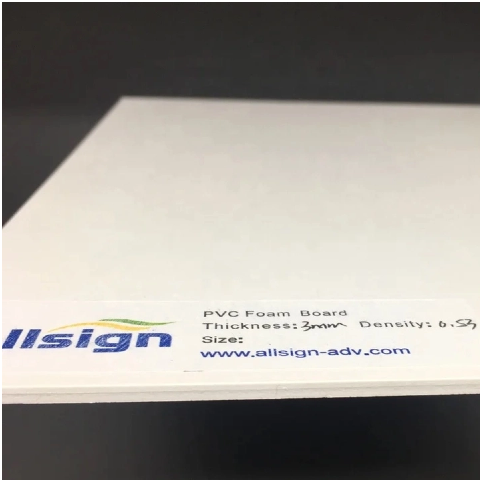
Most people associate PVC foam board only with signage, retail displays, and indoor decoration. However, modern high-density PVC foam board has evolved far beyond commercial advertising use. Thanks to its excellent chemical resistance, moisture immunity, corrosion stability, and low maintenance cost, PVC foam board has become a practical, cost-effective material widely adopted in chemical plants, water treatment facilities, power stations, and public utility construction projects.
If you are looking for durable, non-rusting, chemical-resistant panel solutions for industrial and utility infrastructure, here is a detailed breakdown of where and why PVC foam board fits perfectly into chemical and utility projects.
Core Industrial Properties That Make PVC Foam Board Ideal for Chemical & Utility Works
Unlike wood, MDF, metal, or ordinary plastic sheets that fail easily in harsh industrial environments, high-density PVC foam board possesses unique physical and chemical properties that meet industrial project standards:
Excellent Chemical Resistance: Resistant to dilute acid, alkali, salt solution, and most daily industrial chemical corrosion
Zero Water Absorption: 100% waterproof, no swelling, no delamination in humid or wet industrial environments
Anti-Corrosion & Anti-Rust: Will not rust, rot, or oxidize like steel and wood materials
Low Thermal Conductivity: Stable performance under normal temperature fluctuations
Lightweight & Rigid: Easy to transport, install, and modify on construction sites
Flame Retardant & Safe: Self-extinguishing performance, compliant with industrial building safety requirements
Key Applications of PVC Foam Board in Chemical Industry Projects
Chemical factories feature corrosive gas, liquid splash, high humidity, and complex chemical environments. Traditional building materials face short service life and frequent replacement. PVC foam board solves these pain points perfectly.
1. Anti-Corrosion Wall Panels & Partition Walls
Chemical workshops, laboratory areas, and chemical storage rooms require wall materials that resist chemical erosion. High-density PVC foam boards are widely used as corrosion-resistant wall claddings and functional partitions. They prevent wall peeling, mildew, and corrosion damage, maintaining a clean and stable workshop environment for long-term industrial operation.
2. Chemical Equipment Protection Covers & Baffles
For small and medium-sized chemical equipment, ventilation systems, and pipeline isolation areas, PVC foam board can be custom-cut into protective covers, isolation baffles, and wind shielding panels. Its chemical inertness protects internal structures from corrosive fumes and extends equipment service life with low investment cost.
3. Corrosion-Resistant Operation Platform Boards
Used for partial paving and anti-corrosion decoration of chemical operation platforms, PVC foam boards provide a non-slip, corrosion-resistant, and easy-to-clean surface. Compared with metal plates, it avoids rust pollution and reduces later maintenance costs greatly.
Practical Uses of PVC Foam Board in Utility Projects
Public utility projects such as water treatment, municipal engineering, power facilities, and environmental protection infrastructure require materials with high stability and weather resistance. PVC foam board has become a preferred auxiliary engineering material.
1. Water Treatment & Sewage Plant Decoration
Sewage treatment plants and water purification workshops are high-humidity, high-corrosion scenarios. PVC foam board is widely used for workshop wall panels, facility isolation boards, and channel cover decorative plates. It is completely waterproof and resistant to sewage corrosion, never swelling or deforming in long-term wet working conditions.
2. Municipal Public Facility Panels
In municipal utility projects, PVC foam board is applied to public toilet partitions, underground corridor decorative panels, and environmental protection facility outer cladding. Its lightweight feature reduces building load, while its weather resistance adapts to complex outdoor and semi-outdoor environments.
3. Power Station & Energy Facility Auxiliary Panels
Power plants and new energy base auxiliary areas need fire-retardant, insulating, and anti-corrosion materials. Fire-grade PVC foam boards are used for equipment room partition boards, cable trench decorative baffles, and safety warning base plates, ensuring stable and safe operation of utility facilities.
4. Industrial Safety Signage & Warning Boards
Different from ordinary display signs, industrial chemical and utility signs require corrosion resistance and durability. PVC foam board is the best substrate for chemical hazard warning signs, equipment nameplates, and utility facility prompt boards. It supports UV printing and CNC cutting, with clear patterns and long-term fade-free performance in harsh industrial environments.
Why Choose PVC Foam Board Over Traditional Industrial Materials
VS Metal Plate: No rust, no oxidation, lower cost, lighter weight, and easier on-site processing
VS Wood & MDF: Waterproof, anti-mold, corrosion-resistant, no deformation in humid industrial environments
VS Solid Plastic Sheet: More cost-effective, lighter, better flatness, and convenient for large-area laying
Limitations & Correct Usage Scenarios
PVC foam board is an auxiliary industrial decorative and protective material, not suitable for high-load structural bearing and high-temperature extreme industrial environments. It is perfectly competent for anti-corrosion cladding, isolation protection, facility decoration, and industrial signage in conventional chemical and utility projects, covering 90% of industrial auxiliary panel demands.
Final Conclusion
PVC foam board plays an irreplaceable role in chemical and utility projects. It is no longer limited to simple advertising displays. With outstanding chemical resistance, waterproof anti-corrosion performance, lightweight rigidity, and cost advantages, it has become a mature and reliable solution for industrial workshop renovation, public utility infrastructure construction, and environmental protection engineering decoration.
High-Quality Industrial Grade PVC Foam Board Wholesale
We supply industrial-grade high-density PVC foam boards specially customized for chemical and utility engineering projects. Our boards feature uniform density, strong corrosion resistance, excellent flatness, and stable weather resistance. Custom sizes, thickness customization, UV coating, and CNC cutting processing are all available.
Factory direct sales, bulk discount, free sample testing support. Contact us to get professional PVC foam board engineering solutions and the latest wholesale price!