
Views: 0 Author: Site Editor Publish Time: 2026-06-20 Origin: Site


Upgrading to optical-grade materials demands a significant upfront investment. You must evaluate options carefully before making a commitment. Specifying a high clarity acrylic sheet rather than standard glazing or basic polycarbonates requires a precise understanding of your end-use demands. Engineers, designers, and procurement teams routinely face difficult compromises. They must balance strict weight limits, necessary impact resistance, and the demand for absolute optical perfection. Standard plastics often fail over time, compromising brand perception through hazing or visual distortion. This comprehensive guide bridges fundamental material properties with practical commercial application requirements. You will learn how to evaluate optical thresholds and compare manufacturing methods efficiently. We also cover essential risk mitigation techniques to protect your installations. Ultimately, this knowledge supports accurate procurement and highly confident material specification for your next major project.
High clarity acrylic delivers up to 92% light transmission, matching or exceeding optical glass at half the weight.
Core applications range from retail display infrastructure to high-performance optical and medical enclosures.
Selecting the right sheet requires evaluating cell cast versus extruded manufacturing processes based on budget and machining needs.
Long-term viability depends on mitigating known risks, particularly thermal expansion and chemical sensitivity during cleaning.
Optical clarity is not a subjective measurement. Industry standards strictly define what qualifies as a high-clarity material. Typically, this threshold requires a visual light transmittance (VLT) greater than 92%. The material must also exhibit an exceptionally low haze index. Minimal color distortion across varying thicknesses is equally critical. When you look through the panel, the view should remain entirely undistorted. You should not notice any material presence.
Project managers often face strict budget constraints. They might initially consider a standard transparent plastic sheet for cost savings. Common alternatives include standard PVC or low-grade PETG. However, these budget materials present significant performance gaps. They often yellow under ambient lighting over time. They scratch easily during routine handling. When optical integrity directly impacts brand perception, these flaws become expensive liabilities. A hazy display case devalues the luxury goods inside it.
Establishing clear success criteria prevents costly material failures. Baseline requirements for specifying premium optical materials go beyond basic transparency. You must demand zero optical distortion across the entire sheet surface. You must also evaluate specific UV resistance profiles based on environmental exposure. Finally, edge-polishing capabilities matter heavily. High-end applications require edges that polish to a brilliant, glass-like finish. Standard plastics simply melt or scorch during this finishing process.
Assuming all clear plastics offer the same light transmission rates.
Ignoring the haze index when reviewing technical data sheets.
Overlooking how material thickness alters color perception.
Failing to test edge-finishing techniques prior to full production runs.
The retail sector relies heavily on flawless presentation. Common use cases include museum vitrines, luxury cosmetic displays, and high-end protective casing. In these environments, product visibility drives consumer engagement. The material cannot alter the perceived color of the merchandise.
Therefore, a premium display acrylic sheet must provide absolute transparency. It ensures highly accurate product color rendering under various retail lighting conditions. Furthermore, it must resist impacts associated with high-traffic commercial environments. Shoppers frequently bump into display cases. The enclosure must absorb these minor impacts without cracking or shattering dangerously.
Modern technology depends on advanced light manipulation. Engineers frequently specify these materials for LED diffusing screens. You will also find them in light guide plates and touch-screen protective covers. These applications require precise optical engineering rather than just basic clarity.
You should specify an optical acrylic panel when uniformity is paramount. Uniform light distribution prevents distracting hot spots in LED panels. Specific refractive indexes are non-negotiable for electronic interfaces. The screen must transmit capacitive touch signals while maintaining crystal-clear pixel visibility.
Architects utilize advanced polymers for structural and aesthetic purposes. Primary use cases include massive overhead skylights and highway acoustic barriers. Illuminated outdoor branding also relies heavily on these robust sheets. Outdoor environments present extreme weather challenges.
These applications demand long-term weatherability. The material must offer extreme resistance to yellowing caused by UV degradation. Sustained outdoor exposure destroys inferior plastics within months. Premium grade panels maintain their structural integrity and optical clarity for decades, even under intense direct sunlight.
Healthcare and research facilities require uncompromising safety standards. Manufacturers build infant incubators, laboratory glove boxes, and chemical safety shields from advanced polymers. In these critical environments, visibility literally saves lives.
These enclosures require uncompromised, distortion-free visibility. Medical staff must monitor patients and sensitive reactions perfectly. Furthermore, the material must offer strict sterilization compatibility. It needs high chemical resistance to withstand aggressive hospital-grade disinfectants. Standard plastics often degrade or cloud when exposed to these necessary cleaning agents.
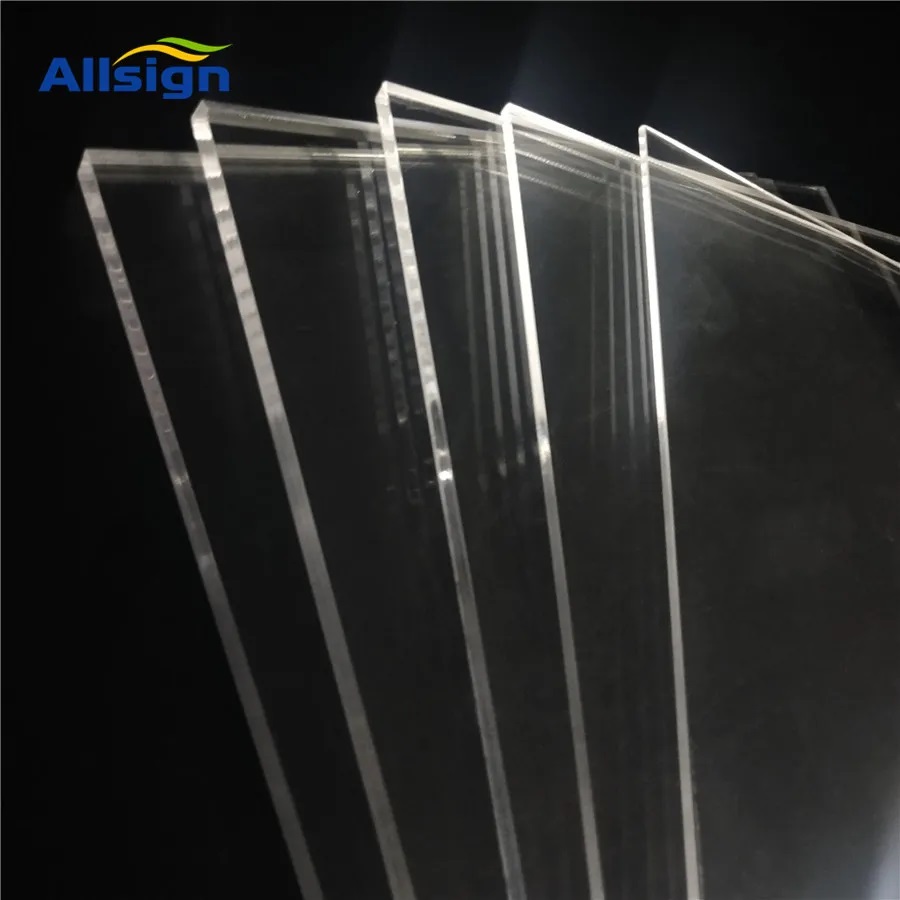
Engineers must evaluate multiple performance dimensions before finalizing material selection. You cannot look at clarity alone. You must analyze how the material physically behaves during fabrication and installation. Comparing advanced polymers directly against traditional glass reveals several compelling structural advantages.
First, consider optical precision versus traditional silica glass. Advanced acrylic offers comparable, and sometimes superior, light transmission. Standard glass contains iron impurities. These impurities create a noticeable green edge-tint. This green tint alters the color temperature of light passing through it. Acrylic eliminates this issue entirely. It provides brilliant, colorless edges that enhance modern, minimalist designs.
Next, evaluate the impact of weight reduction on structural load. Halving the material weight transforms project logistics entirely. This weight reduction directly translates to highly measurable project outcomes. Below is a numbered list of immediate benefits gained from reducing material weight:
Drastically lower freight and shipping costs across long distances.
Easier on-site handling, requiring fewer installation technicians.
Reduced requirements for heavy structural framing and support brackets.
Lower risk of catastrophic, heavy shattering during transit or installation.
Finally, assess machinability and fabrication limits. Traditional glass shatters easily during complex modifications. Acrylic responds beautifully to advanced fabrication techniques. You can thermoform it into sweeping, complex curves. You can laser cut it for microscopic dimensional accuracy. It achieves a museum-quality polished edge rapidly. Fabricators use flame polishing or diamond edge polishing tools to create a seamless, glass-like finish effortlessly.
Performance Comparison: Glass vs. High Clarity Acrylic | ||
Performance Metric | Standard Silica Glass | High Clarity Acrylic |
|---|---|---|
Light Transmission | ~89% (often with green tint) | Up to 92% (colorless) |
Impact Resistance | Low (shatters dangerously) | High (up to 17x stronger) |
Weight per Sq. Ft (1/4" thick) | ~3.28 lbs | ~1.56 lbs |
Thermoforming Capability | Requires extreme heat (>1000°F) | Excellent (forms at ~350°F) |
Once you choose acrylic over glass, another critical decision awaits. You must select the correct manufacturing process. Manufacturers produce these sheets using two primary methods. They either pour liquid resin into molds (cell casting) or push heated resin through dies (extrusion). Each method yields distinctly different physical properties.
Cell cast manufacturing involves pouring liquid acrylic between two highly polished glass plates. This slow curing process creates a premium product. It boasts superior optical clarity and a higher molecular weight. The high molecular weight makes it significantly harder. It offers better resistance to crazing (micro-cracking) during intense machining. Fabricators overwhelmingly prefer cast options for exceptionally thick applications, such as large aquarium walls.
However, you must accept certain trade-offs. The batch-curing process drives up the cost point. Furthermore, casting produces wider thickness tolerances across a single sheet. A half-inch thick sheet might vary slightly in thickness from one corner to the other. You must account for this variance during precise mechanical assemblies.
Extruded manufacturing pushes molten polymer mass through precise steel dies. This continuous process creates high-volume output rapidly. It produces highly consistent thickness across the entire sheet. This consistency makes it ideal for complex interlocking assemblies. It remains highly cost-effective for large production runs. It is also slightly softer, making it easier to thermoform at lower temperatures.
The trade-offs involve machining limitations. Extruded material is prone to gumming up during high-speed CNC routing. The router bit friction melts the softer plastic. It also features a slightly lower chemical resistance compared to cast alternatives. You must choose cleaning agents more carefully.
Use the following structural chart to guide your immediate procurement decisions. It provides a rapid rule-of-thumb for selection based on project priorities.
Decision Matrix: Casting Method Selection | ||
Primary Project Requirement | Recommended Manufacturing Process | Primary Reason |
|---|---|---|
Complex CNC Machining & Routing | Cell Cast | Higher molecular weight prevents gumming and melting. |
Large Scale Flat Panel Production | Extruded | Highly consistent thickness and lower unit cost. |
Extreme Thickness Needed (>1 inch) | Cell Cast | Extrusion limits maximum thickness capabilities. |
Rapid Thermoforming | Extruded | Forms at lower temperatures with faster cycle times. |
Museum Quality Edge Polishing | Cell Cast | Resists crazing during intense flame polishing. |
Even premium materials fail if installed incorrectly. You must understand the physical limitations of the polymer. Acknowledging implementation risks early prevents disastrous post-installation failures. Proper engineering and strict maintenance protocols ensure decades of reliable performance.
Scratch susceptibility remains a primary concern. Unmodified acrylic is inherently softer than glass. It scratches easily during aggressive cleaning or heavy tactile use. You mitigate this risk by specifying hard-coated grades. Manufacturers apply specialized abrasion-resistant coatings to the sheet surface. This coating drastically improves scratch resistance while maintaining high optical clarity. You should always specify hard-coated grades for high-traffic touch screens or accessible retail displays.
Thermal expansion presents significant engineering challenges. Plastics expand and contract dynamically with temperature changes. You must detail the specific coefficient of linear thermal expansion for your chosen grade. Never bolt a panel tightly into a rigid metal frame. The expanding plastic will bow outwards or crack at the stress points. You must use engineered mounting systems. Incorporate oversized drill holes. Use flexible silicone sealants and rubber gaskets. These accommodations allow the panel to "float" safely as temperatures fluctuate.
Chemical sensitivity requires strict operational oversight. Improper cleaning agents cause immediate and irreversible damage. This damage appears as crazing, which looks like a network of tiny spiderweb micro-cracks. Standard ammonia-based glass cleaners destroy acrylic rapidly. You must outline standard compliance protocols for your facility maintenance teams. Provide explicit lists of approved cleaners. Usually, mild soap and water or specialized plastic polishes work best. Use only clean microfiber cloths to prevent grinding surface dust into the panel.
Never wipe dry dust off the surface; always use a liquid lubricant.
Ban ammonia, acetone, and harsh solvents from the installation area.
Use oversized washers to distribute pressure evenly at mounting points.
Leave adequate expansion gaps inside metal framing channels.
Specifying high clarity acrylic sheet requires a careful balance of competing factors. You must evaluate strict optical requirements alongside necessary fabrication methods. You must also account for long-term environmental durability. Upgrading from standard plastics prevents costly brand degradation. Choosing the correct manufacturing process—whether cell cast or extruded—optimizes your production budget and machining outcomes. Addressing thermal expansion and chemical sensitivity ensures your installation survives real-world conditions safely.
Your next steps should focus on rigorous physical evaluation. Advise your procurement team to request physical material samples immediately. Review technical data sheets (TDS) closely for specific light transmission metrics and haze indices. Finally, consult directly with an experienced plastics fabricator. They can assist with prototyping complex joints and testing edge-polishing techniques. Thorough upfront testing guarantees your final production run meets exact performance expectations.
A: Premium grades incorporate advanced UV stabilizing treatments during manufacturing. These treatments prevent the polymer from degrading under direct sunlight. High-quality outdoor panels typically resist noticeable yellowing for 10 to 30 years. Standard or budget grades lack these stabilizers and will yellow quickly.
A: Optical panels feature much stricter manufacturing tolerances. They are specifically engineered for precise light-guiding properties and exact refractive indexes. Standard display sheets prioritize general transparency and impact resistance. Optical panels ensure uniform light distribution for LEDs and electronic interfaces without causing hot spots.
A: Yes, it performs exceptionally well outdoors. Cell cast acrylic generally offers slightly superior long-term weatherability compared to extruded options. However, both types withstand rain, snow, and hail much better than standard glass. Always confirm the specific UV resistance rating before outdoor installation.
A: Cell casting allows for massive thickness capabilities. Manufacturers can cast custom blocks exceeding 4 inches in thickness for aquariums or deep-sea enclosures. Extruded manufacturing usually caps out around 1 inch thick due to die limitations. Cast is mandatory for extremely thick optical applications.


