
Views: 0 Author: Site Editor Publish Time: 2026-06-30 Origin: Site


Have you ever specified a material for a high-end commercial project, only to realize the final installation looks entirely wrong? Selecting the incorrect acrylic type often leads to poor lighting control, unintended opacity, and frustrating material replacements. In casual sourcing circles, professionals use "tinted" and "colored" acrylic interchangeably. However, they represent fundamentally different light transmission properties. A solid color blocks light. A tint filters incoming light. This simple physical distinction dictates the ultimate success of architectural and decorative installations. Our goal is to provide you an evidence-based framework to make the right choice. We will help you evaluate both materials based on light interaction, fabrication realities, and aesthetic outcomes. You will learn how to make precise sourcing decisions for complex environments. You will also discover how to avoid common specification errors. Ultimately, mastering these material properties ensures your final decorative installation matches your original design vision.
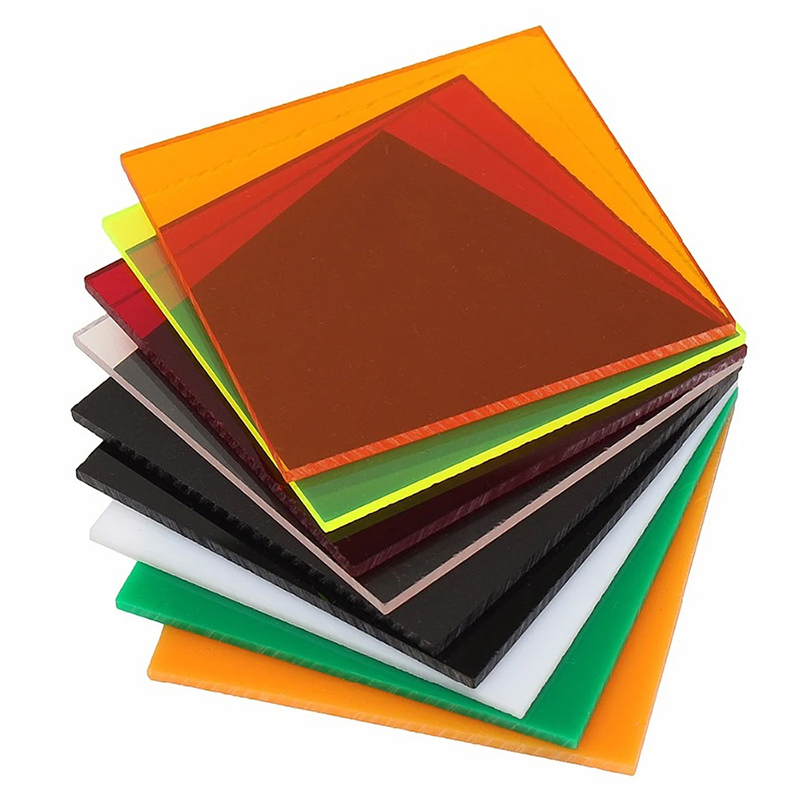
Core Difference: A tinted acrylic panel is inherently translucent (acting like a visual filter), while a color acrylic sheet typically implies an opaque or semi-opaque solid color.
Light Transmission (VLT): Tinted panels prioritize light passage and depth; colored sheets prioritize surface vibrancy and light blocking.
Application Matching: Use tinted panels for spatial partitions and lighting fixtures; use solid color sheets for high-contrast signage, cladding, and vibrant focal points.
Specification Risk: Color density shifts with material thickness; physical samples are mandatory before bulk procurement.
Designers must establish clear definitions before sourcing materials for high-stakes projects. The industry uses specific terminology to classify acrylic sheets. Understanding these categories prevents frustrating communication breakdowns between designers and fabrication partners.
A tinted acrylic panel is a specialized transparent material. Manufacturers formulate it using precise dye ratios. These dyes filter incoming light without obstructing your visibility. You can compare this effect to automotive window tint. You can look outside perfectly, but the glass appears dark from exterior angles. Industry professionals standardize these panels by their Visible Light Transmission (VLT) percentages. This strict measurement tells you exactly how much light passes through the material. High-quality tinted panels maintain exceptional optical clarity. They never look cloudy or distorted.
A color acrylic sheet represents a much broader product family. This term primarily denotes opaque or heavily diffused solid colors. Designers use these sheets to reflect light rather than pass it. They provide a highly saturated, vibrant acrylic sheet appearance. This bright vibrancy remains completely consistent regardless of any backlighting setup. The core formulation prioritizes surface color density over transparency. You cannot see objects behind an opaque colored sheet. This makes it an entirely different tool for spatial design.
Choosing the correct material requires a structured evaluation process. You must analyze how each acrylic type behaves in real-world environments. We break down the core dimensions designers use to qualify these materials.
Light interaction defines the functional purpose of acrylic materials. Tinted panels allow anywhere from 10% to over 50% light transmission. This calculated transparency creates beautiful "edge-glow" effects. When ambient light hits the surface, it travels through the sheet. The light then catches the cut edges. It gives the material a striking internal luminescence. Colored sheets behave entirely differently. They block most or all incoming light rays. You evaluate them based on surface gloss or matte finishes rather than translucency.
Feature | Tinted Acrylic | Colored (Opaque) Acrylic |
|---|---|---|
Light Passage | Allows 10% - 50%+ transmission | Blocks most or all light |
Visual Depth | High (Creates edge-glow effects) | Low (Focuses on surface reflection) |
Evaluation Metric | Visible Light Transmission (VLT) | Surface gloss and finish consistency |
Primary Function | Filtering ambient light and glare | Providing bold, saturated focal points |
Modern interior design often balances openness and privacy. Tinted materials offer excellent psychological separation. They partition a space without closing off a room entirely. They are highly ideal for modern office dividers or retail shelving. You can see movement and silhouettes through them. Opaque colored materials provide absolute privacy. They function exactly as a physical and visual wall. You cannot see shapes or shadows behind them. This trait suits confidential meeting rooms or back-of-house screens.
The Density Rule is a critical implementation reality. Understanding this rule prevents major specification disasters. In tinted panels, thicker sheets appear much darker. Light must travel through more dyed material. A quarter-inch panel looks significantly darker than an eighth-inch panel of the exact same color mix. Opaque colored sheets do not suffer from this issue. They maintain uniform surface color regardless of physical thickness. The surface reflects light immediately before it penetrates the core.
Theoretical knowledge must translate into practical application. Different architectural scenarios demand specific material properties. Let us examine the best use cases for each acrylic category.
Tinted panels excel in environments requiring light manipulation. They filter harsh rays while maintaining an open atmosphere. Consider these optimal applications:
Skylights and Glazing: They reduce solar glare in architectural features. They protect interiors from intense brightness.
Retail Displays: They require product visibility. They add a sophisticated branded color wash to the merchandise.
Custom Lighting Enclosures: They diffuse harsh LED glare efficiently. They maintain desired luminosity levels for ambient lighting.
Balcony Guards: They offer safety compliance. They still allow residents to enjoy exterior views safely.
Solid colored sheets dominate visual branding and structural cladding. They provide bold, undeniable presence. Consider these optimal applications:
Corporate Signage: They form striking 3D lettering. They deliver exact brand color matching for global companies.
Wall Cladding: They serve as durable, wipe-clean protective wainscoting. A custom decorative acrylic panel often pairs beautifully alongside solid colored sheets.
Opaque Furniture Components: They create flawless plinths and solid pedestals. They hide internal framing structures completely.
Exhibition Stands: They build highly visible modular booths. They attract attention across crowded convention floors.
Fabrication introduces multiple physical variables. Raw material selection is only the first step. You must understand how these materials respond to post-processing and environmental stressors.
Many contractors attempt to save money using aftermarket solutions. They apply window tint films to standard clear acrylic. This approach often leads to severe bubbling and outgassing over time. Acrylic naturally releases trapped moisture and gases. These gases destroy the adhesive bond of applied films. Factory-cast tinted panels eliminate this risk entirely. The dye exists within the chemical structure. It cannot peel, bubble, or delaminate.
Sometimes a specific brand color is unavailable in standard catalogs. You might need to paint an existing sheet. Applying specialized acrylic paints to a clear or colored sheet requires careful preparation. You must perform mechanical sanding to create surface friction. You also need specific chemical primers to prevent flaking. Opaque sheets generally accept paint better. Tinted sheets lose their core transparency once painted. Therefore, factory color-matching is always the superior choice.
Acrylic expands and contracts due to temperature fluctuations. Darker tinted panels and opaque colored panels absorb significantly more heat than clear acrylic. They act like thermal sponges in direct sunlight. Framing systems must account for these expansion tolerances. If you rigidly bolt a dark panel into a metal frame, the heat expansion will cause catastrophic cracking. Sun-exposed decorative installations require flexible gaskets and oversized drill holes.
Specification is a rigorous process. Guesswork leads to rejected installations. Follow this logical sequence to guarantee material success.
You must answer a fundamental spatial question first. Do you need a shadow, a glow, or a complete block? If your design relies on seeing shapes behind the panel, choose a tint. If you want a soft, illuminated edge, specify a mid-level VLT tint. If you need to hide structural cables or wall damage, you must specify an opaque colored sheet.
Never rely on generic web images to pick your materials. Computer monitors fundamentally misrepresent translucency and saturation. Screens emit their own light. Physical materials reflect ambient light. Rely strictly on manufacturer color codes. Examples include standard numbers like 2064 Grey or 2422 Amber. These codes represent universal chemical formulas across major fabrication plants.
Physical verification is non-negotiable. Order physical samples in the exact thickness you intend to install. Remember the Density Rule discussed earlier. A sample ring of thin chips will mislead you if you plan to order thick structural sheets. Take these accurate samples to your actual site. Verify the true color density under your project's specific lighting conditions. Check them under both daylight and artificial LED setups.
The choice between a tinted acrylic panel and a color acrylic sheet hinges entirely on your project's relationship with light and visibility. Tinted sheets excel at filtering light, preserving visual depth, and creating subtle spatial divisions. Colored sheets deliver bold, opaque vibrancy, total privacy, and impactful branding presence. You must respect the physics of light transmission and thermal expansion to ensure a flawless installation. Follow the Density Rule meticulously when reviewing material thicknesses. For your immediate next step, consult with a trusted fabrication specialist. Request physical material swatches in precise thicknesses. Always verify lead times early for custom color-matched batches to keep your project on schedule.
A: No. Plexiglass (Plexiglas®) is simply a well-known brand name for cell-cast acrylic. The technical properties are completely identical to standard high-quality acrylic sheets. Both materials offer the same strength, clarity, and fabrication capabilities across all color and tint options.
A: Premium cast acrylic is naturally UV-stable. However, the longevity of the specific tint depends heavily on the internal dyes used. You must always specify "exterior grade" or UV-resistant grades for any outdoor decorative use to prevent long-term discoloration.
A: No. Opaque sheets will not transmit any light through their core. The light will merely block at the edge. For edge-lighting effects, you must use a clear, translucent, or specific edge-lit tinted acrylic panel to carry the illumination properly.


