
Views: 0 Author: Site Editor Publish Time: 2026-10-01 Origin: Site


Builders, fabricators, and project engineers frequently face a tough choice when specifying plastics for harsh environments. The core challenge is finding a formulation that guarantees long-term durability without destroying the project budget. Polyvinyl Chloride has proven itself as an exceptionally reliable, waterproof replacement for traditional wood and metal. However, simply specifying "PVC" is not enough, as the manufacturing process drastically alters how the material behaves in the field.
Supply chain volatility and fluctuating lumber prices have accelerated the shift toward engineered polymers. Contractors are moving away from moisture-vulnerable materials in favor of rot-proof plastics. This transition highlights a strict requirement for materials that offer predictable structural reliability alongside excellent weatherability. While solid rigid and foamed Celuka sheets belong to the same chemical family, their internal structures dictate entirely different use cases on the job site. This guide breaks down the physical properties, machining characteristics, and ideal applications of both options so you can specify the right material for your next build.
Solid PVC Sheets feature a high-density, uniform structure. Their massive tensile strength makes them the definitive choice for load-bearing frameworks and highly corrosive chemical processing environments.
Celuka Foamed Boards utilize a hybrid structure with an aerated inner core and a hardened outer skin. This delivers an outstanding strength-to-weight ratio tailored for custom cabinetry, marine bulkheads, and premium architectural signage.
Material selection ultimately hinges on weight restrictions, surface finish requirements, and whether the panel will act as a structural support or a moisture-resistant facade.
Both formulations completely eliminate the rot, mold, and insect damage commonly associated with timber or medium-density fiberboard.
Recent market analyses point to a significant evolution in how commercial construction and marine fabrication sectors procure materials. Driven by stricter building codes that demand moisture-resistant and mold-free environments, project managers are actively seeking advanced polymer alternatives. We are seeing a distinct industry trend where "lightweighting"—reducing the overall dead load of a structure without sacrificing surface durability—has become a primary engineering objective.
This shift heavily favors hybrid manufacturing techniques like the Celuka process for interior and architectural applications. Meanwhile, heavy industrial sectors are doubling down on solid thermoplastics to ensure compliance with stringent chemical containment and fire safety regulations. The market is clearly segmenting based on the precise balance of weight, aesthetics, and raw structural integrity.
To make an accurate material assessment, we must first look at standard, unplasticized polyvinyl chloride. When absolute physical strength and chemical resistance are the top priorities, fabricators turn to this baseline material.
A standard rigid PVC board is a solid, homogenous sheet throughout its entire profile. During extrusion, no expanding gases or foaming agents are introduced into the polymer matrix. The resulting material is incredibly dense, typically registering a specific gravity between 1.3 and 1.4 g/cm³.
Because manufacturers omit plasticizers during production, the sheet remains stiff and unyielding. The solid extrusion process guarantees that the core is just as robust as the outer surface. Consequently, you get consistent mechanical properties whether you are milling, routing, or tapping the material on the shop floor.
The standout advantage of this solid composition is sheer impact and tensile strength. In an active warehouse, if a forklift accidentally strikes a solid PVC column guard, the plastic absorbs the sustained mechanical stress without buckling or shattering.
Furthermore, Type I solid PVC provides an elite chemical resistance profile. It remains completely inert when exposed to aggressive industrial chemicals, strong acids, and inorganic solvents. It also acts as a natural electrical insulator and is self-extinguishing, meeting critical fire-retardant compliance standards in commercial building codes.
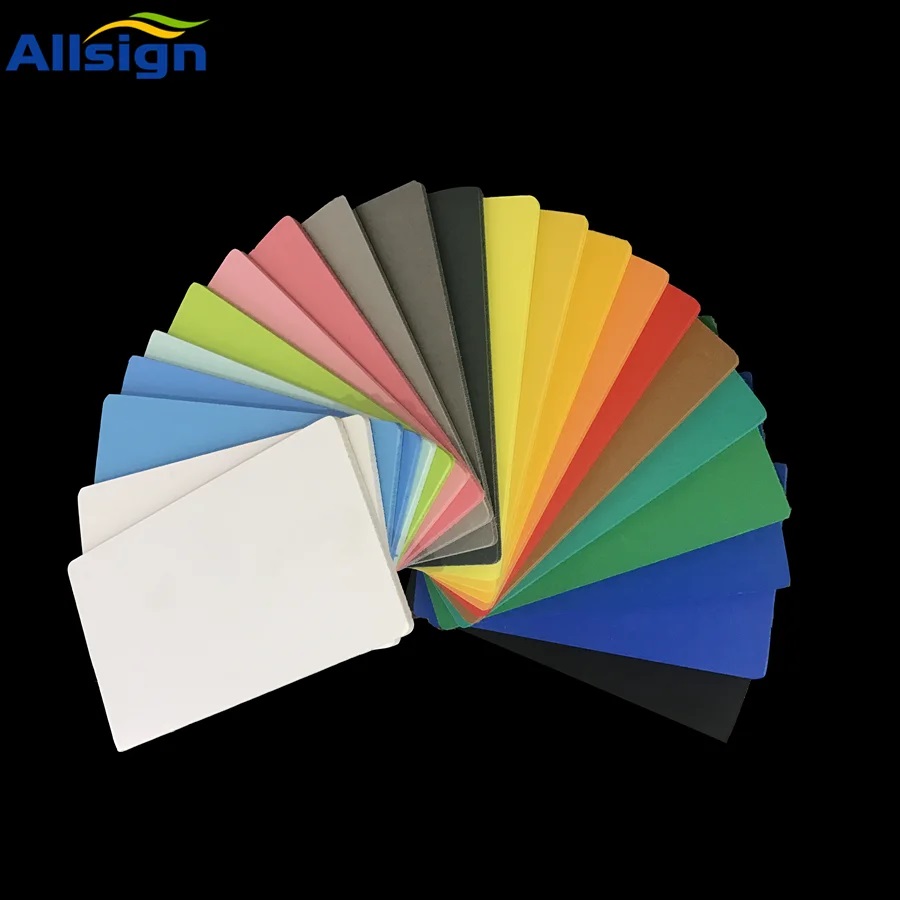
While solid PVC is incredibly strong, its massive weight creates serious logistical hurdles for architectural facades and interior design projects. The highly engineered Celuka extrusion method was developed specifically to solve this dead-load problem.
Producing a PVC Celuka board requires a specialized die and calibration setup. As the heated resin mixes with specific foaming agents and exits the extruder, it immediately enters a cooling calibrator. This tool rapidly drops the temperature of the material's exterior.
Because the outer layer solidifies instantly, the expanding gases are trapped and forced to expand inward. This controlled internal expansion creates a closed-cell foam core with a gradient density. The panel is highly dense at the surface but becomes progressively lighter toward the center. This drops the overall density down to roughly 0.4 to 0.8 g/cm³, depending on the required spec.
The defining feature of the Celuka process is the smooth, hardened outer skin. It is vital to understand that this is not an applied laminate. The skin is an integral part of the polymer matrix formed by the rapid cooling phase, which means it will never peel, flake, or delaminate.
This hardened exterior delivers excellent practical benefits. It resists abrasions, minor impacts, and surface scratches far better than standard free-foam PVC. Aesthetically, it provides a premium, furniture-grade finish right off the factory line. The non-porous surface also serves as an exceptional substrate for digital printing inks, vinyl wraps, and industrial paints.
When evaluating materials for a specific build, project managers need to look at hard performance metrics. Here is how these two plastics compare in real-world fabrication scenarios.
The most obvious physical difference is mass. Solid sheets are heavy. Maneuvering thick panels of solid PVC often requires a multi-person crew or mechanical lifting equipment. While this density provides immense strength, it adds a significant dead load to the underlying architectural framework.
In contrast, the aerated inner core makes Celuka significantly lighter. A single technician can easily handle large sheets. This weight reduction drastically lowers freight costs, simplifies overhead installations, and reduces the structural strain on wall mounts and bulkheads.
If your project involves spanning long horizontal distances without sagging, or supporting heavy concentrated machinery, a heavy duty PVC board is strictly required. Its solid molecular structure prevents material creep and deflection over time.
Celuka boards possess a weaker inner core and are not designed for primary load-bearing applications. If you use Celuka horizontally as a heavy-duty storage shelf, it will eventually bow unless supported by a rigid metal or timber sub-frame. It is best deployed as a non-structural facade, partition, or cabinetry component.
Manufacturing costs tie directly to the volume of petroleum-based resin consumed. Because solid PVC contains zero air pockets, it requires substantially more raw material per square foot, driving up the price. Celuka provides a highly cost-effective alternative. By replacing a portion of the core resin with a micro-cellular structure, manufacturers deliver thick, rigid-feeling panels at a fraction of the raw material cost.
Feature | Solid Rigid PVC | Celuka Foamed PVC |
|---|---|---|
Internal Structure | Solid, uniform density | Gradient density, foamed core |
Weight Profile | Heavy (1.3 - 1.4 g/cm³) | Lightweight (0.4 - 0.8 g/cm³) |
Surface Finish | Matte, industrial | Smooth, glossy, hardened skin |
Load Bearing Capacity | High (Structural) | Low to Moderate (Non-structural) |
Impact Resistance | Extreme | High on surface, moderate overall |
Relative Cost | Higher | Lower (Highly cost-effective) |
Given its uncompromising density, solid PVC is reserved for environments where material fatigue is simply unacceptable.
Because it will not corrode, solid Type I PVC is a staple in water treatment and chemical processing. Fabricators routinely weld it into acid tank liners, processing vats, and chemical storage containers. It guarantees long-term containment safety even when exposed to harsh alkaline solutions.
In commercial building, this material is specified for high-abuse components. It is frequently used for cleanroom wall panels, industrial shelving, and structural guards. High impact resistance and the ability to hold heavy mechanical fasteners under vibration are non-negotiable in these settings.
The unique blend of a lightweight core and a premium skin makes Celuka the go-to material for visual, moisture-prone environments.
Celuka has completely transformed the custom cabinetry sector. It serves as the ultimate PVC project board for outdoor kitchens, bathroom vanities, and marine furniture. Unlike plywood, it is entirely waterproof and will never swell in high humidity. The dense outer skin grips door hinges and drawer slides exceptionally well, preventing cabinet sag over time.
Weight reduction is critical in marine and RV manufacturing to improve fuel efficiency. Builders replace heavy marine plywood with Celuka to construct seating bases, interior partitions, and bulkheads. Additionally, the flawless surface finish makes it a top-tier substrate for dimensional signage and high-end outdoor advertising.
Both materials are highly machinable using standard woodworking equipment like CNC routers, table saws, and drill presses. However, they require different handling techniques to achieve clean results.
The primary fabrication difference comes down to heat management. Solid PVC is incredibly dense. Routing it at high spindle speeds generates excess friction, which can melt the plastic and gum up the cutter. You must use slower feed rates and ensure proper chip clearance. Celuka, conversely, cuts fast and clean. The aerated core dissipates heat rapidly, and the hard skin guarantees crisp edges without the chipping associated with melamine.
For assembly, solid PVC is perfect for thermal plastic welding and solvent cementing, which chemically fuses the pieces into a structural bond. Celuka excels with mechanical fasteners. You can drive coarse-threaded screws directly into the face of a Celuka panel. The hard skin and dense micro-cells grip the threads tightly without splitting the board.
Finalizing your material spec requires a realistic assessment of the physical demands of your installation. Use this quick checklist to guide your decision:
Do you require structural integrity and extreme chemical resistance? Specify the solid sheet. It supports heavy loads and survives harsh industrial exposure.
Do you need a lightweight, paintable finish for custom cabinetry? Choose the Celuka board. It delivers the look of painted wood with zero moisture vulnerability.
Is weight reduction a strict engineering requirement? Celuka is the clear winner, drastically cutting the dead load in marine, RV, and suspended architectural projects.
Will the panel face severe mechanical impacts? Opt for solid PVC to prevent structural fracturing from machinery or heavy foot traffic.
Both solid and foamed PVC boards offer incredible waterproof durability, effectively solving the rot and corrosion issues that plague traditional building materials. Your final choice depends entirely on the specific demands of the job site. Solid core boards provide maximum structural strength for demanding industrial applications. Foamed Celuka boards deliver a lightweight, premium finish perfect for visual displays and custom cabinetry. By carefully evaluating your load requirements and aesthetic goals, you can guarantee a successful, long-lasting installation. To explore exact specifications and find the perfect material match for your next build, review the engineered plastic solutions available at Allsign.
For environments exposed to moisture, PVC is vastly superior to plywood. While marine plywood is treated to resist water, it will eventually absorb moisture, swell, and rot over time. PVC is 100% waterproof, immune to insect damage, and will never delaminate, making it the better long-term investment for outdoor cabinetry and marine applications.
When properly installed, PVC boards can last decades outdoors without rotting or degrading structurally. However, if the material is exposed to intense, direct UV sunlight for prolonged periods, standard PVC may experience slight surface chalking or discoloration. Using UV-stabilized formulations or applying an exterior-grade acrylic paint will significantly extend its aesthetic lifespan.
Yes, the hardened outer skin combined with the dense micro-cellular foam core allows Celuka to grip coarse-threaded screws exceptionally well. In wet environments, it actually outperforms traditional particleboard and MDF, because it will not absorb water and loosen the fastener's grip over time.
Absolutely. Celuka is particularly easy to paint due to its smooth, non-porous surface. For the best adhesion on either type of PVC, clean the surface thoroughly with isopropyl alcohol, apply a high-quality plastic-adhesion primer, and finish with a 100% acrylic or polyurethane-based paint.


