
Views: 0 Author: Site Editor Publish Time: 2026-06-22 Origin: Site


Material selection dictates scrap rates, machine wear, and final product quality in any modern shop. Choosing the wrong polymer for high-friction or high-heat fabrication inevitably leads to costly rework. You cannot afford to guess when running expensive production lines. Precision machining, laser engraving, and structural bonding demand a robust material. A high-molecular-weight cast acrylic sheet is the undisputed industry standard. However, not all cast materials yield identical results. Variations in manufacturing drastically affect how they behave under extreme stress.
This guide provides a robust technical evaluation framework. You will discover exactly how to specify the right materials for your specific fabrication processes. We will explore machining behavior, chemical resilience, and dimensional tolerance realities. You will learn to optimize your supply chain and ensure your next project succeeds.
Machinability: Cast acrylic chips cleanly during CNC routing and produces a high-contrast, frosted finish under laser engraving, outperforming extruded alternatives.
Tolerance Realities: Due to the manufacturing process, cast sheets have a wider thickness variance (typically ±10%) compared to extruded sheets, which must be factored into slotting and joinery designs.
Masking Matters: Paper masking is non-negotiable for laser cutting to prevent melting and off-gassing issues associated with plastic film masking.
Chemical Resilience: As a chemical resistant acrylic, cast PMMA withstands aggressive solvent welding and cleaning agents better than extruded, minimizing the risk of micro-crazing.
The core difference between cast and extruded polymers lies in their molecular architecture. Manufacturers produce cast sheets by pouring liquid methyl methacrylate monomer between two glass plates. A slow curing process creates long, heavily cross-linked polymer chains. This cell-casting method yields a significantly higher molecular weight. It results in superior thermal stability and structural rigidity.
Extruded materials undergo a much faster, continuous manufacturing process. Factories push melted polymer pellets through a sizing die. This stretches the polymer chains in one direction. It creates directional stress and lowers the overall heat resistance. You will immediately notice this difference during intensive shop fabrication.
Machining behavior perfectly illustrates this contrast. Extruded acrylic tends to melt under friction. It frequently gums up end mills. It can even fuse back together directly behind the cutting bit. This forces operators to constantly pause and clean their tooling. Conversely, high-quality cast material fractures cleanly. It produces crisp, dry chips. It rapidly evacuates heat away from the cutting zone.
Aesthetic yields also strongly favor cast polymers. Consider the laser engraving process. When a laser strikes an extruded sheet, the material simply melts and remains clear. You get zero visual contrast. However, a cast panel vaporizes uniquely under the beam. It yields a bright, frosted white mark. This provides excellent contrast for signage, edge-lit displays, and detailed artwork.
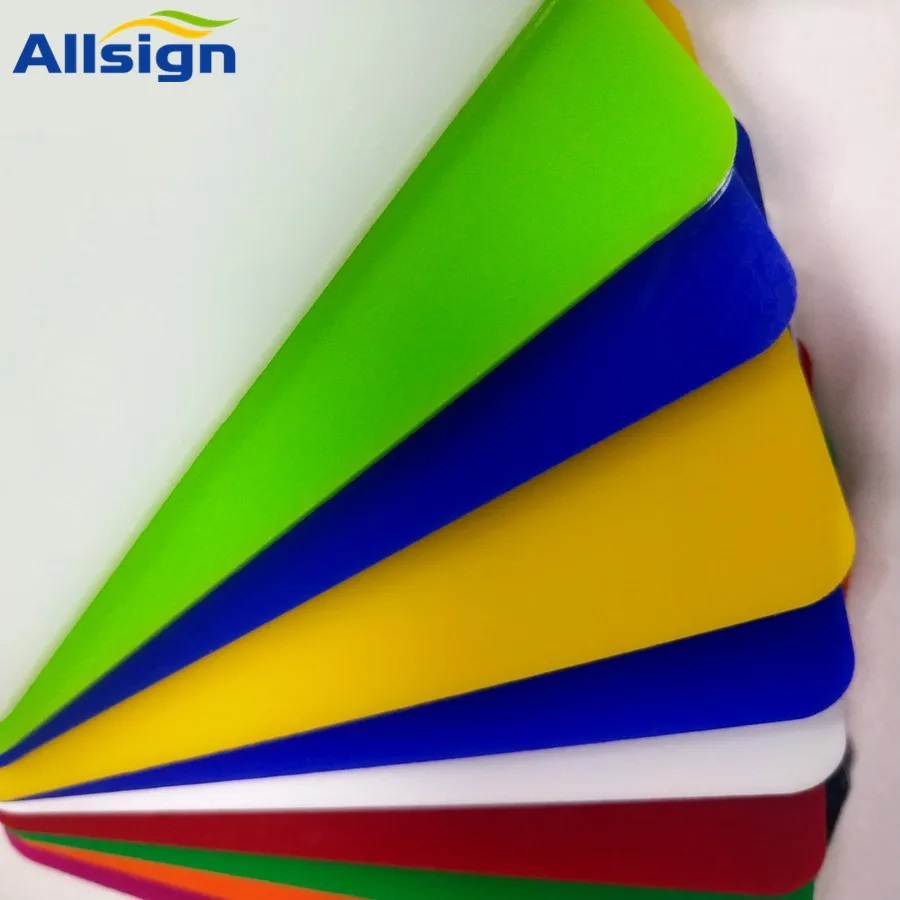
Specifying the right fabrication acrylic sheet requires analyzing three primary dimensions. You must account for thickness tolerances, masking materials, and optical batching. Ignoring these factors will disrupt your assembly line.
Cast sheets inherently vary in thickness across a single panel. This remains the primary implementation risk for fabricators. The glass mold curing process creates a natural center bulge or edge taper. Industry standards typically allow a variance of ±10%. A nominal 6mm sheet might measure 5.4mm in one corner and 6.6mm in another.
You must engineer workarounds for these tolerance realities. Tight slot-and-tab joinery will fail if designed assuming perfect uniformity. We recommend designing joints featuring slight clearances. Use structural adhesives to fill minor gaps. Alternatively, utilize mechanical fasteners rather than strict friction-fit designs. Advanced CNC operators sometimes run a light surfacing pass to flatten critical mating areas before cutting parts.
Protective masking prevents surface scratches during transit and handling. However, your fabrication method dictates which masking material you must order. Choosing incorrectly destroys parts and damages equipment.
Masking Type | Primary Advantages | Fabrication Compatibility | Critical Warnings |
|---|---|---|---|
Poly-Film (Plastic) | Easy to peel off. Leaves no residue. Transparent for easy defect inspection. | Excellent for CNC routing, manual cutting, and simple hole drilling. | Hazardous for laser cutting. It melts, catches fire, and ruins edges. |
Heavy Craft Paper | Absorbs heat. Prevents scorch marks. Protects against vapor redeposition. | Mandatory for laser cutting and high-heat engraving. | Harder to remove on complex parts. Can leave adhesive residue if stored improperly. |
Premium clear materials achieve 92% visible light transmission. This matches optical glass. However, you must evaluate supplier consistency for tinted or opaque sheets. Color variations between batches will ruin multi-sheet projects. Always request color-matched production runs. Ask your supplier if they utilize standardized spectrophotometer testing to guarantee color uniformity across distinct pallet orders.
Your shop equipment dictates how a PMMA sheet performs. You must adapt your feeds, speeds, and temperatures to match the material's molecular properties.
Rigidity matters immensely during CNC operations. Loose hold-downs cause chatter, leading to severe edge chipping. Vacuum tables provide the best stability for flat panels. You must maintain proper chip load to prevent friction buildup.
Select the right tooling: Always use single-edge O-flute bits. They evacuate chips efficiently.
Optimize spindle speed: Keep RPMs relatively low (typically 16,000 to 18,000 RPM) to minimize localized melting.
Maintain aggressive feed rates: Move the tool quickly (usually 100 to 150 inches per minute). Slow feeds cause the bit to rub rather than cut.
Implement air blasts: Direct compressed air at the cutting zone. It clears hot chips instantly and cools the tool.
Lasers cut cast polymer through localized vaporization. The high thermal mass of the cross-linked chains prevents a messy liquid phase. It transitions directly from a solid into a vapor. This creates a remarkably smooth, flame-polished edge straight from the laser bed.
You must adjust your focal point carefully. For thick panels, focus the beam slightly below the top surface. This prevents edge tapering. Ensure robust exhaust extraction to remove volatile organic compounds instantly. If vapor lingers, it condenses back onto the surface, causing stubborn white hazing along the cut line.
Cast polymer responds beautifully to localized heat. Strip heaters soften the material precisely along the intended fold. Bending occurs smoothly without surface tearing. However, you must understand the material's unique memory effect.
The cross-linked chains "remember" their original flat state. If a bent panel is reheated, it will actively try to unbend and flatten out. You must hold thermoformed parts securely in a cooling jig until they drop below 140°F. Otherwise, the angle will slowly open up over time.
Fabricators join panels using thin, water-like acrylic cements. These solvents rely on capillary action. They wick quickly into tight joints, slightly dissolving the polymer chains. As the solvent evaporates, the chains interlock, forming a permanent weld.
Cast polymer takes slightly longer to set than extruded varieties due to its density. You must apply consistent clamping pressure. Joint strength relies entirely on edge preparation. A perfectly smooth, routed edge creates a flawless, bubble-free weld. A rough, saw-cut edge traps air and creates weak, unsightly joints.
Fabricated parts must survive harsh real-world environments. Everyday cleaning fluids and environmental stressors destroy inferior plastics rapidly. You must select a highly stable material.
Environmental stress cracking, known as crazing, destroys clear plastics. It manifests as a network of tiny, silvery micro-cracks radiating across the surface. These cracks severely weaken the structure. Crazing occurs when chemical solvents penetrate weak polymer chains under mechanical stress.
Because it features a dense, cross-linked molecular structure, a premium chemical resistant acrylic inherently resists crazing. It withstands aggressive solvent welding and chemical exposure far better than extruded alternatives. You rarely see spontaneous micro-cracking around drilled holes or bent corners when using high-grade cast panels.
Improper cleaning destroys surface integrity. Many shops mistakenly wipe panels down with harsh chemicals. You must enforce strict cleaning protocols on the shop floor.
Never use ammonia-based glass cleaners. Ammonia aggressively attacks the polymer surface and causes immediate clouding.
Use a diluted solution of isopropyl alcohol (IPA) carefully. Limit exposure times. Heavy soaking can still trigger crazing on highly stressed bent edges.
Rely on specialized plastic cleaners or simple mild soap and water.
Always use ultra-soft microfiber cloths. Paper towels contain abrasive wood fibers that create microscopic surface scratches.
Architectural applications and exterior signage face intense ultraviolet radiation. Inferior plastics quickly yellow, turn brittle, and shatter upon impact. High-grade cast panels naturally feature excellent UV-blocking properties. They maintain optical clarity and structural toughness even after a decade of direct sunlight exposure. This makes them ideal for marine windshields, outdoor light boxes, and exterior retail branding.
Sourcing the right material involves more than just reading a price tag. Procurement teams must analyze technical data and optimize material yield. A cheap sheet becomes incredibly expensive if it causes massive off-cut waste.
You must learn to read Material Data Sheets (MDS) critically. Do not rely on marketing brochures. Look directly at the physical and mechanical properties. A high Rockwell hardness (M scale) indicates excellent scratch resistance. Tensile strength metrics reveal how the panel handles structural loads.
Thermal expansion coefficients also require careful review. All plastics expand and contract with temperature shifts. You must calculate this movement for large architectural installations. Ensure the supplier provides verified testing data conforming to recognized standards, such as ISO 7823-1.
Parameter | Typical Value | Why It Matters For Fabrication |
|---|---|---|
Light Transmission | 92% | Ensures edge-lit signage illuminates evenly without dark spots. |
Rockwell Hardness (M) | 95 - 100 | Dictates resistance to surface scratching during handling and shipping. |
Tensile Strength | 10,000 psi | Determines maximum load capacity for structural displays and shelving. |
Forming Temperature | 340°F - 380°F | Guides oven settings for complex vacuum forming or line bending. |
Off-cut waste destroys shop profitability. You must optimize sheet dimensions against your standard machine bed sizes. Buying standard 4x8 panels makes sense for small lasers. However, large-format CNC routers often accommodate 5x10 or even 6x10 sheets.
Map your typical nesting software outputs. Often, upgrading to a slightly larger sheet size allows you to nest 30% more parts. This drastically reduces the total number of sheets required. Always cross-reference available cast acrylic sheet sizes with your most common project dimensions before finalizing a bulk order.
Improper storage ruins flat sheets before they ever reach the router bed. You must address handling constraints immediately upon delivery. Never lean panels against a wall at a steep angle. This introduces severe bowing.
Store panels completely flat on robust shelving systems. If you must use vertical A-frame racks, ensure the back support spans the entire height of the sheet. Keep storage environments climate-controlled. Extreme temperature swings introduce condensation, which damages paper masking adhesives and complicates future removal.
Professional fabrication demands uncompromising material performance. Extruded plastics simply cannot withstand the heat, friction, and chemical stress of a modern production environment. While cast polymers require minor tolerance accommodations, their thermal stability and exceptional machining clarity make them the only viable choice. They fracture cleanly under heavy CNC routing. They vaporize beautifully under laser beams. They yield structurally sound, bubble-free solvent welds.
Your next step involves rigorous in-house testing. We highly recommend requesting sample off-cuts from potential suppliers. Run these samples through your specific laser or CNC setup before committing to bulk pallet orders. Test your masking preferences and verify edge-polishing results firsthand.
Empower your procurement teams to demand precise specifications. Contact technical sales representatives to discuss tight tolerance capabilities, custom sheet sizing quotes, and targeted color-matching services. Careful material selection today ensures flawless fabrication tomorrow.
A: Inspect the edges. Cast edges usually look frosted and rougher from the factory. Extruded edges appear smoother but may show faint extrusion lines. For a definitive test, apply a drop of solvent cement to a scrap piece. Extruded material reacts quickly, becoming gummy and hazy. Cast material resists the solvent longer and maintains surface integrity. Additionally, laser engraving a test scrap instantly reveals the truth: cast turns frosted white, while extruded remains clear.
A: Yes. You must use O-flute bits specifically designed for rigid plastics. These bits feature an open geometry. They curl the stiff cast chips effortlessly and eject them from the cutting channel. Standard wood bits trap heat. This causes rapid tool wear and poor edge finish. Always ensure optimal chip evacuation to prevent chatter and friction.
A: Yes, flame polishing produces a brilliantly clear, glass-like edge very quickly. However, the intense localized heat introduces immense internal stress. If you later apply chemical cleaners or solvent adhesives near a flame-polished edge, the material will almost certainly craze and crack. We recommend mechanical buffing or diamond edge polishing if subsequent chemical exposure is expected.


