
Views: 0 Author: Site Editor Publish Time: 2026-06-28 Origin: Site


Brand displays and retail signage demand precise material selection. You need strict visual consistency. You also require reliable structural longevity. Selecting the wrong plastic type often leads to catastrophic project failures. Poor choices result in rapid color fading under store lights. Incorrect light diffusion creates ugly, distracting hotspots behind illuminated logos. Inadequate material thickness causes embarrassing structural bowing over time. Worse still, picking an incompatible sheet can cause complete failure during fabrication. Materials might melt during laser cutting or chip during CNC routing. These errors waste your production time and destroy budgets.
We aim to solve these common specification issues here. We provide a rigorous technical evaluation framework. You will learn exactly how to choose the right color acrylic sheet for your specific application. We explore vital factors like manufacturing methods, light transmission grades, and environmental durability. We also help you scale choices for enterprise rollouts. Read on to master these crucial polymer selection techniques. Your next visual merchandising project will look flawless and last significantly longer.
Cast vs. Extruded: Cell cast acrylic offers superior color variety and machining tolerance, making it ideal for custom brand displays, while extruded suits high-volume, flat applications.
Light Transmission matters: Light box displays require specific translucency grades to prevent hotspotting, whereas opaque sheets are required for standard block-out lettering.
Environment dictates specs: Outdoor decorative acrylic signage requires distinct UV-resistant formulations compared to temporary indoor visual merchandising.
Thickness prevents failure: Sizing must account for display load and wind resistance to prevent bowing over time.
Choosing between manufacturing types heavily impacts your fabrication budget. It also dictates the final aesthetic finish of your retail display. You must understand how factories produce a colored PMMA sheet to avoid costly specification errors. The two primary production methods behave very differently under mechanical stress. We evaluate both options below to guide your procurement strategy.
Factories manufacture cell cast acrylic using a deliberate, manual process. Technicians pour liquid methyl methacrylate directly into precise glass molds. The material then cures slowly. This slow curing process creates a significantly higher molecular weight. It yields a premium, highly stable polymer.
Benefits: You gain access to a massive range of custom colors. Cast panels excel during intense fabrication processes. Laser cutting leaves a beautifully polished, glass-like edge. The high molecular weight prevents the material from melting prematurely. It performs exceptionally well during heavy CNC machining and edge polishing routines. You experience fewer rejected parts on the factory floor.
Trade-offs: The labor-intensive production process increases your raw material costs slightly. You must also account for wider thickness variations. Cast panels typically exhibit a ±10% thickness variance across a single sheet. You must plan for this tolerance when designing tight-fitting assembly joints.
Manufacturers produce extruded acrylic continuously. Massive machines push the raw polymer mass through high-pressure steel rollers. This rapid forming technique results in a lower molecular weight compared to cell cast alternatives. The physical properties differ noticeably.
Benefits: You receive highly consistent thickness across every single panel. The variance remains minimal. This automated process drives down unit costs dramatically. It provides a highly cost-effective solution for massive, flat retail rollouts. If you need thousands of simple, flat shelf dividers, extruded panels make perfect financial sense.
Trade-offs: The lower molecular weight introduces specific fabrication risks. The material is prone to chipping or gumming up during high-speed CNC routing. Router bits generate friction heat, which melts the plastic quickly. The fast production speed also means factories limit their stock color options. You will find it harder to source highly specific brand colors in small quantities.
Feature | Cell Cast Acrylic | Extruded Acrylic |
|---|---|---|
Molecular Weight | High | Low |
Thickness Tolerance | Wide (approx. ±10%) | Very tight and consistent |
Machinability | Excellent (melts less, polishes well) | Fair (prone to chipping and melting) |
Color Availability | Extensive custom options | Limited stock options |
Best Application | Custom displays, thick signage | High-volume flat panels, simple cuts |
Visual merchandising relies entirely on precise lighting control. A vibrant acrylic panel looks vastly different under sharp retail spotlights compared to soft backlit LEDs. Specifying the wrong finish or translucency rating destroys brand color accuracy entirely. We must balance light manipulation and surface texture carefully. You need to match the material optical properties to your specific store environment.
Opacity dictates exactly how much light passes through the polymer structure. We categorize these light transmission values into three distinct groups.
Opaque: These panels feature zero light transmission. They block out 100% of background light. You should use them for solid dimensional letters. They work perfectly for non-illuminated brand backgrounds. Opaque panels ensure wall imperfections never show through your signage.
Translucent (Light Diffusing): Engineers specifically design these panels for LED light box displays. They diffuse internal light evenly across the entire panel face. This critical function hides harsh LED bulb hotspots. It maintains vibrant color saturation even when fully illuminated. Always ask suppliers for the specific light transmission percentage (LTV).
Transparent/Tinted: These sheets function exactly like colored glass. They offer excellent optical clarity. You can see directly through them. Designers use them frequently for window displays. They create stunning layered depth effects in modern retail environments.
The exterior texture of your material changes how customers perceive your brand. You must choose surface finishes based on store lighting and expected customer interaction.
High-Gloss: This remains the standard industry finish. It delivers a high-impact, premium aesthetic. However, highly lit retail environments will expose visible fingerprints instantly. Ceiling spotlights will also create distracting surface glare. Use high-gloss panels in areas out of direct customer reach.
Matte/Frosted (Non-Glare): This finish diffuses ambient surface light smoothly. It softens the visual impact elegantly. The textured surface easily hides minor scratches and messy fingerprints. We strongly recommend frosted finishes for high-touch, interactive retail environments. They require significantly less daily maintenance from store staff.
Best Practice: Always test your chosen finish under actual store lighting conditions. A panel might look perfect under warehouse fluorescent tubes. It might look terrible under warm retail accent lights. Small sample tests prevent massive rollout disasters.
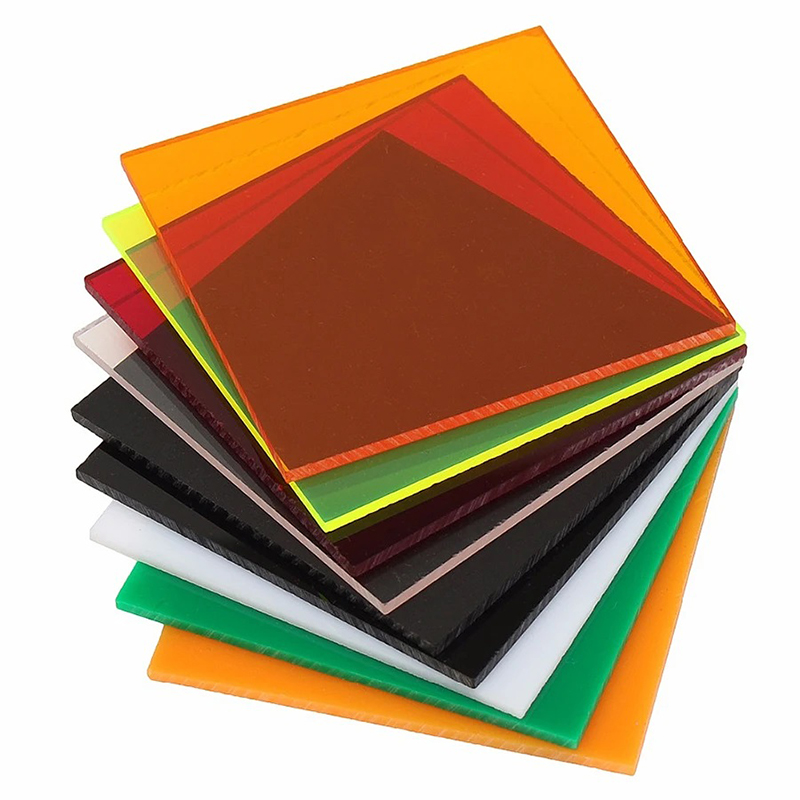
Specifying materials too thin causes severe structural warping later. Gravity and environmental factors will bend weak plastics. Conversely, over-specifying thickness simply wastes your procurement budget. Correct sizing ensures your decorative acrylic signage remains flat, professional, and safe over years of active use. You must calculate mechanical loads accurately.
Let us examine standard thickness requirements across common retail applications. You should treat these dimensions as minimum baseline standards.
Small Point-of-Purchase (POP) Displays: Use 1/8" (3mm) as your starting point. It balances rigidity and weight perfectly. This thickness suits tabletop counters, cosmetic stands, and small product risers. It cuts quickly and bonds easily.
Medium Signage & Wall Panels: Step up to 3/16" (4.5mm) or 1/4" (6mm) thickness. You absolutely need this extra mass to prevent bowing. Any unsupported panel span wider than 24 inches requires at least 1/4" material. This prevents the center from sagging under its own weight.
Freestanding/Structural Displays: Mandate 3/8" (9mm), 1/2" (12mm), or even thicker sheets. Floor-standing display units endure heavy abuse. Cleaning crews bump into them. Customers lean on them. Thicker panels withstand accidental impacts safely. They also provide enough edge surface area for secure mechanical fastening.
Many novice designers fail to account for thermal expansion. This represents a critical engineering oversight. Acrylic inherently expands and contracts as ambient temperatures shift throughout the day. You must engineer your mounting frames carefully to accommodate this movement.
Always leave appropriate tolerance gaps within aluminum extrusion channels. Never drill holes exactly the same size as your mounting bolts. Drill oversized holes instead. Use rubber washers to hold the panel securely without locking it rigidly in place. If you rigidly bolt panels down, they will crack under thermal stress. The plastic needs room to breathe.
Sun exposure degrades synthetic polymers rapidly. Faded brand colors immediately damage corporate identity. Customers perceive sun-damaged signage as a sign of business neglect. Outdoor retail displays must survive prolonged ultraviolet radiation. They must resist yellowing, hazing, and micro-cracking for many years. You must specify materials engineered for harsh exterior climates.
Standard materials fail quickly outdoors. You must select the right chemical formulation for exterior environments.
Standard vs. UV-Stabilized Formulations: A standard indoor sheet lacks specific UV inhibitors. The sun's energy breaks down the polymer chains quickly. You must specify UV-stabilized formulations for exterior use. These advanced sheets absorb and dissipate ultraviolet energy safely. They maintain their optical clarity and structural integrity far longer.
Pigment Heat Absorption: Dark and light pigments perform very differently outdoors. Black, navy, or dark green panels absorb significantly more solar heat. They expand aggressively. They will warp much faster in direct sunlight compared to white or yellow panels. You must specify thicker sheets for dark outdoor signs to counteract this thermal distortion.
Always verify the manufacturer's outdoor performance warranty. Premium cast acrylic typically carries a 10-year guarantee against significant color shift. However, warranties often contain specific installation clauses. Read the fine print carefully.
Ask prospective suppliers for their accelerated weathering test data. Laboratories use intense xenon arc lamps to simulate years of sun exposure in weeks. This data proves how the polymer handles extreme solar loads over time. We recommend referencing established testing frameworks like ASTM D4802. This industry standard dictates proper weathering criteria for acrylic polymers. Choosing certified materials protects your brand investment long-term.
You need highly reliable supply chain partners for enterprise rollouts. Choosing a poorly equipped supplier leads to delayed store openings. Inconsistent materials ruin the visual harmony of multi-location projects. Here is how you can vet suppliers effectively before signing massive procurement contracts. We focus on critical production capabilities.
Evaluate your potential color acrylic sheet vendors against these three strict criteria.
Custom Color Matching (Pantone/RAL): Global brands require exact color matching. Ask vendors about their specific Minimum Order Quantities (MOQs). Assess their production lead times for brand-specific polymer formulations. Some mills require a massive 5-ton production run for custom tones. Others offer agile, small-batch color matching. Ensure their MOQ aligns with your actual project needs.
Batch Consistency: Verify their internal quality control processes rigorously. A red panel ordered in Q1 must exactly match a replacement panel ordered in Q4. Visual discrepancies look terrible when panels sit side-by-side. Request their historical color tolerance data. Professional suppliers use digital spectrophotometers to guarantee batch-to-batch consistency.
Pre-fabrication Services: Ask if the supplier offers cut-to-size delivery options. Inquire deeply about their masking choices. A protective paper mask suits intense laser cutting perfectly. It peels off easily and resists heat. A standard film mask works better for simple transport and general handling. Utilizing pre-fabrication services reduces your local labor time significantly. It allows your installers to focus on assembly rather than raw material prep.
Selecting the right color acrylic sheet involves a careful, technical balancing act. You must align your visual intent with hard mechanical realities. Consider light transmission, brand color accuracy, and surface finish carefully. You must also evaluate the manufacturing method, structural thickness, and required UV resistance. Skipping any of these steps invites project failure and budget overruns.
We advise buyers to request physical sample chains immediately. Take these samples into the field. Test them strictly under actual final-environment lighting. This step proves absolutely critical for backlit displays and outdoor signage. Never approve bulk production orders without this real-world verification. Establish a strong relationship with a transparent supplier, and your brand displays will deliver lasting visual impact.
A: Yes, you can easily bend them. However, cell cast acrylic generally proves superior for thermoforming. It maintains color density much better across stretched areas. Extruded sheets often thin out and lose color saturation when heated and stretched over complex molds.
A: PMMA (acrylic) offers superior optical clarity and exceptional edge-finishing capabilities. It also resists UV degradation inherently better. Polycarbonate boasts extreme impact resistance. However, it yellows much faster outdoors and offers significantly fewer stock color options for brand designers.
A: Always specify a designated "sign grade" or LED-diffusing acrylic. Next, you must ensure a proper depth ratio. This is the physical distance between your LED modules and the sheet surface. Match this interior depth precisely to the material's specific light diffusion rating.


